Japan’s Defense Equipment Transfers to the Philippines: What the Abukuma-Class Destroyer Transfer Reveals
Hironobu Takezawa(Research Fellow, The Japan Institute of International Affairs)


"Research Reports" are compiled by participants in research groups set up at The Japan Institute of International Affairs, and are designed to disseminate, in a timely fashion, the content of presentations made at research group meetings or analyses of current affairs. "Research Reports" represent their authors' views.
Introduction
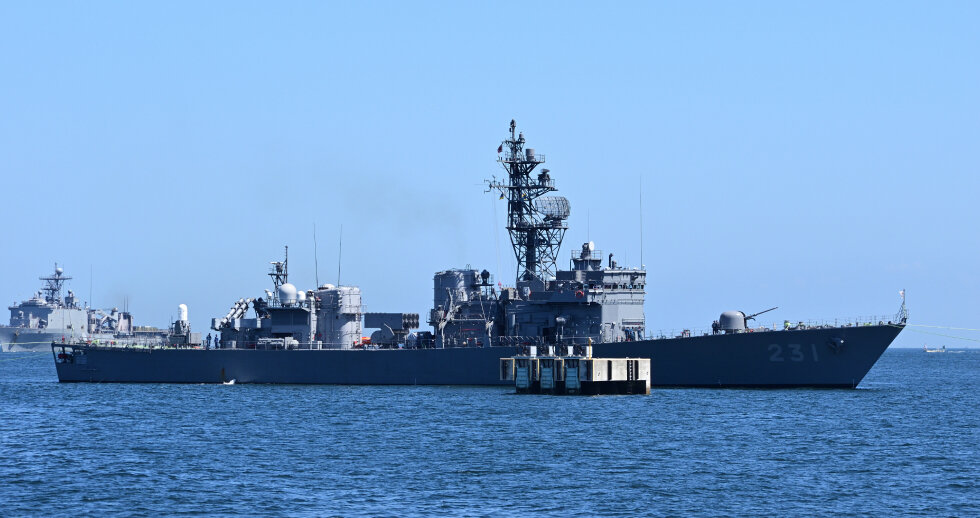
In May 2026, Japan and the Philippines announced the start of work toward the transfer of Abukuma-class destroyers of the Japan Maritime Self-Defense Force (JMSDF) to the Philippines. If realized, this will be the first transfer of lethal defense equipment under the Three Principles on Transfer of Defense Equipment and Technology as revised in April of that year. As Japan and the Philippines mark the 70th anniversary of the normalization of diplomatic relations, the planned transfer of destroyers is among the developments that symbolize the current stage of Japan-Philippines security cooperation, which is advancing rapidly.
This report examines the significance of Japan’s expanding defense equipment transfers to the Philippines in the context of Philippine security policy, as well as what Japan can achieve through these transfers.
Background: The Transformation of Philippine Security Policy and Its Equipment Needs
In recent years, Philippine security policy has been undergoing a period of major transformation and expansion. Since its founding, the Armed Forces of the Philippines (AFP) has treated counterinsurgency operations against domestic communist and Muslim insurgent groups as its primary mission, while relying largely on the presence of U.S. forces under the U.S.-Philippines Mutual Defense Treaty for its external security. As a result, the development of the Philippines’ own naval and air capabilities has long lagged behind.1 To take one example, large surface combatants play an important role in patrolling outlying islands and territorial waters. Yet until 2011, when a former U.S. Coast Guard Hamilton-class cutter (approximately 3,250 tons; commissioned in 1967) was acquired from the United States, the Philippine Navy’s largest, and indeed only, ship of this kind had long been a severely outdated Cannon-class destroyer escort (approximately 1,600 tons) commissioned into the U.S. Navy in 1943, during World War II. Likewise, the Philippines had no fighter aircraft from the retirement of its U.S.-made F-5 light fighters in 2005 until the introduction of South Korean-made FA-50 light fighters in 2015.
However, as China’s coercive behavior in the South China Sea has become increasingly routine 2 and the Philippines’ internal security situation has improved , the focus of Philippine security policy has been shifting toward external security. This shift originated under the Benigno Aquino III administration, which decided to move the focus of the AFP’s mission from domestic counterinsurgency to external defense. After a period of stagnation under the Rodrigo Duterte administration, the shift has gathered further pace under the current Ferdinand Marcos Jr. administration. In January 2024, Secretary of National Defense Gilberto C. Teodoro Jr. announced the Comprehensive Archipelagic Defense Concept, which centers on the projection of military power throughout the country’s territory, territorial waters, and exclusive economic zone. Made public at around the same time, Re-Horizon 3, the third phase of the Revised AFP Modernization Program, envisages acquisitions worth about US$35 billion over 10 years, including frigates, submarines, fighter aircraft, land-based anti-ship missiles, and air defense systems.
Against this backdrop, Japan-Philippines security cooperation has also deepened rapidly. The Japan-Philippines Joint Statement issued on the occasion of President Marcos’s visit to Japan in May 2026 declared the elevation of bilateral relations to a Comprehensive Strategic Partnership (CSP). This is the first CSP the Philippines has entered into. Setting aside the United States, which stands in a category of its own as the Philippines’ only formal ally, some observers regard it as the highest-ranking partnership in Philippine foreign relations. The statement also affirmed Japan’s contribution to the capacity building of the AFP and the further promotion of defense equipment transfers.
The Current Stage of Defense Equipment Transfers to the Philippines
Under the Three Principles on Arms Exports of 1967 and the related policy guideline issued by the Miki administration in 1976, Japan long maintained a policy under which the overseas transfer of its defense equipment was, in principle, not permitted. In April 2014, however, the Three Principles on Transfer of Defense Equipment and Technology were adopted, allowing transfers under certain conditions, and the National Security Strategy of December 2022 explicitly called for “promoting transfer of defense equipment and technology.”7
Defense equipment has been transferred to the Philippines under the Agreement concerning the Transfer of Defense Equipment and Technology signed in February 2016. Transfers so far include used JMSDF TC-90 training aircraft together with support for their operation, and UH-1H helicopter parts from the Japan Ground Self-Defense Force. In 2023–2024 came the first transfer of newly manufactured complete equipment: fixed (FPS-3ME) and mobile (TPS-P14ME) air surveillance radars manufactured by Mitsubishi Electric. In addition, in November 2023 Japan decided to provide coastal radar systems to the Philippines as the first project under Official Security Assistance (OSA), 8 which had been established in April of that year. The systems were handed over in February 2026.9
On April 21, 2026, Japan abolished the five categories (rescue, transport, warning, surveillance, and minesweeping) that had previously restricted defense equipment transfers, making it possible, subject to screening, to transfer any type of defense equipment.10 Shortly afterward, on May 5, Minister of Defense Shinjiro Koizumi and Secretary Teodoro met in Manila. The two agreed to establish a bilateral working group to examine equipment transfers and signed the Statement by the Defense Ministers of Japan and the Philippines on the Further Promotion of Defense Equipment and Technology Cooperation.11 On July 7, 2026, Secretary Teodoro revealed that the two countries had reached agreement in substance on the Philippines’ acquisition of five Abukuma-class destroyers. Following their decommissioning from the JMSDF, the ships are expected to be transferred to the Philippine Navy within two to three years. Consultations are also under way on the transfer of additional used TC-90 training aircraft.12
Effects of the Equipment Transfers: What Can Japan Achieve?
What, then, can Japan achieve through defense equipment transfers to the Philippines? Japan’s defense white paper describes defense equipment transfer as enhancing “bilateral defense relationships from traditional exchanges to deeper cooperation in a phased manner.” 13 At a press conference in Manila on May 5 concerning defense equipment transfers to the Philippines, Minister Koizumi was asked by a reporter about the importance of equipment exports. He replied that defense equipment transfer is “a key policy instrument for creating a desirable security environment for Japan.”14 A senior official of the Ministry of Foreign Affairs has also told the media that one aim of defense equipment transfers to the Philippines is to build cooperative ties while the present administration, which is well disposed toward cooperation with Japan, remains in office.15
Nevertheless, scholars of arms transfers and alliances, including Andrew J. Pierre and Stephen M. Walt, point out that arms transfers do not necessarily produce the effects the supplier seeks. Their impact depends on a range of conditions, such as the recipient’s degree of dependence, the availability of alternative suppliers, and the degree of operational integration. 16 What effects, then, can be expected from Japan’s defense equipment transfers to the Philippines?
The ultimate effect Japan seeks from these transfers is likely to lie in an indirect benefit: shaping the regional order and the international environment by enhancing the capabilities of the Philippines. Japan has placed the Free and Open Indo-Pacific (FOIP) at the core of its foreign policy, and the current administration of Prime Minister Sanae Takaichi has put forward the Updated FOIP. FOIP’s guiding principle is to maintain a free and open regional order based on the rule of law, and FOIP has been described as a vision that combines two orientations: counterbalancing China and pursuing stability in a region that includes China.17 The stability of the maritime order in the Indo-Pacific, including the South China Sea, which borders the Philippines, is vital to securing Japan’s sea lanes and is one of Japan’s motives for promoting FOIP.18
The Updated FOIP announced by Prime Minister Takaichi in May 2026 introduces multilayered cooperation with like-minded countries, including maritime security cooperation and capacity building, as a new means of achieving its goals. 19 The current equipment transfers to the Philippines can be understood as part of a policy aimed at realizing FOIP. 20 In light of this discussion, the destroyer transfer is expected to help maintain the regional order by enhancing the Philippines’ maritime security and maritime domain awareness (MDA) capabilities, and thereby to advance the ideals of FOIP.
More concretely, how can the destroyer transfer contribute to maintaining the regional order and enhancing the AFP’s capabilities, thereby helping to realize the effects outlined above? The Abukuma class was designed from the outset as a destroyer with limited combat capability, and the ships are now outdated, having been in service for more than 30 years.21 They are therefore generally inferior in performance to the new South Korean-built frigates that the AFP is currently acquiring. Analysts have pointed out, however, that the procurement plan under Re-Horizon 3 is heavily weighted toward land-based anti-ship missiles and strike systems, and that large maritime assets capable of conducting peacetime patrol and surveillance, responding to gray-zone situations, and operating in distant waters are structurally underrepresented.22 Indeed, the Philippine Navy’s current inventory of large surface combatants, which would form the core of such assets, consists of only three used Hamilton-class cutters and four new South Korean-built frigates. 23 Under these circumstances, the provision of Abukuma-class destroyers will help fill the AFP’s shortage of large vessels.
Acquiring anti-submarine warfare (ASW) capability will also be an important task for the Philippine Navy in the years ahead. ASW is a field that requires comprehensive proficiency in sonar operation, patrol, and analysis, and possessing the assets alone is not sufficient. The JMSDF, which has cultivated ASW as a core competence since the Cold War, has a high level of expertise in this field. 24 If the Abukuma-class ships were transferred to the Philippine Navy with their ASW equipment retained, they could serve as a foundation for developing the Philippine Navy’s ASW capabilities through education, training, and joint exercises with the JMSDF. By substantially improving the Philippines’ maritime security and MDA capabilities, this strengthening of the AFP should in turn help realize Japan’s FOIP vision of maintaining an international order based on the rule of law.
A second anticipated effect is the deepening of Japan-Philippines relations through equipment transfers. The Philippines is currently diversifying its sources of equipment among the United States, South Korea, Israel, and others, but ASW, as noted above, is one of the fields in which Japan is thought to have a comparative advantage over other suppliers. This not only offers the Philippines an opportunity to enhance its capabilities, but could also enable Japan to build closer cooperative relations with the Philippines by drawing on that comparative advantage. Moreover, the Philippines’ operation of Japanese-built combatants should help deepen the Philippines’ working relationships with the JMSDF and Japanese defense companies, laying a foundation for more advanced equipment transfers and co-production in the future. The Philippine Navy has employed a used Pohang-class corvette as a transition and training platform for the introduction of the Jose Rizal-class frigates. 25 In the same way, the Abukuma class, supported by JMSDF education, training, and maintenance assistance, could establish a basis for operating Japanese-built ships and serve as a bridge to the next stage of cooperation, such as co-production and the acquisition of new ships.
Challenges: Limitations and the Sustainability of Policy
Observers have pointed to challenges in the effectiveness of Philippine security policy. Re-Horizon 3 is extremely large in scale, and its feasibility has been questioned in light of the size of the Philippines’ public finances. In fact, from 2014 to 2020 the AFP received only about 40 percent of the programmed funds, and just under 30 percent of the projects were completed. Moreover, for the AFP, which has long treated counterinsurgency as its main mission, the path toward a rapid shift to external security is likely to be difficult. Some also point out that budget allocations still give priority to the Army and to domestic counterinsurgency over the Navy and the Air Force, which are central to external security. 28
Whether Philippine policy can be sustained across administrations is another challenge. Observers have noted that, depending on the outcome of the 2028 presidential election, current security policy could change or be discontinued. In the Philippines, foreign and security policy tends to swing relatively widely with changes of administration, as illustrated by the turbulence in foreign policy in the early years of the Duterte administration. The effects of equipment provision, however, are considered relatively resilient to such risks. 29 Indeed, studies point out that even under the Duterte administration, which chose a conciliatory line toward China, and under the Gloria Macapagal Arroyo administration, the AFP, the Philippine Coast Guard, and other agencies continued to modernize, and MDA capabilities continued to improve. These efforts, the studies add, contributed to the harder line toward China that followed.30
Conclusion
On July 1, 2026, the World Bank reclassified the Philippines, along with fellow ASEAN member Vietnam and others, from lower-middle-income to upper-middle-income status. The Philippine economy has grown at an average annual rate of 5.8 percent over the past five years, and the country’s presence in the region is increasing. With this economic development as a backdrop, the modernization of the AFP and security cooperation with Japan are moving forward.
Although their combat capabilities are limited, the transfer of the used destroyers could help fill the Philippines’ shortage of large vessels while also contributing to stronger Japan-Philippines relations and the realization of FOIP. Looking further ahead, Japan’s potential contributions are likely to lie not only in the provision of more advanced and capable equipment beyond used equipment, but also in the capacity-building assistance in fields such as MDA, ASW, maintenance, and education and training. Manila, too, has shown strong interest in cooperation that goes beyond the transfer of the used destroyers and other equipment recently announced, extending to the purchase of defense equipment and even co-production. Japan-Philippines equipment and defense industrial cooperation has room to deepen beyond the earlier air surveillance radars and the current transfer of used destroyers, in terms of the types of equipment, their quality, and the modalities of cooperation alike.
Relations between Japan and the ASEAN countries, including the Philippines, were long marked by wide gaps in their levels of economic and social development. These gaps, however, are gradually narrowing as the ASEAN countries develop, and this trend is projected to continue. Security is no exception: the security policies of the Philippines and other ASEAN countries are generally becoming more robust. In this international environment, if defense equipment transfers are to remain an effective policy instrument for Japan, it is important to bear in mind that not every transfer will automatically produce the desired effects. With a view to realizing the FOIP vision of a stable regional order, Japan should seek out and promote defense cooperation and equipment transfers that serve the interests of both sides.
This report reflects developments as of August 26, 2026.
- On the AFP’s long-standing focus on counterinsurgency as its primary mission, its reliance on the U.S.-Philippines alliance for external defense, and the subsequent shift toward territorial defense, see Renato Cruz De Castro, “The Aquino Administration’s 2011 Decision to Shift Philippine Defense Policy from Internal Security to Territorial Defense: The Impact of the South China Sea Dispute,” The Korean Journal of Defense Analysis 24, no. 1 (2012): 67–87; Renato Cruz De Castro, “Strategic Shift in Philippine Defense: From the Aquino to the Marcos Administration,” Friedrich-Naumann-Stiftung für die Freiheit, November 2024, https://shop.freiheit.org/download/P2@1846/935355/A4_Strategic%20Shift%20in%20Philippine%20Defense%20EN.pdf; International Crisis Group, “Riding Unruly Waves: The Philippines’ Military Modernisation Effort,” Asia Report, no. 349 (August 12, 2025), https://www.crisisgroup.org/sites/default/files/2025-08/349-philippines-military-modernisation.pdf.
- Tomotaka Shoji and Yuki Tsujita, “フィリピンと南シナ海問題――硬軟両用対応の成否” [The Philippines and the South China Sea Issue: The Success or Failure of a Combined Hard and Soft Approach], NIDSコメンタリー [NIDS Commentary], no. 347 (National Institute for Defense Studies, August 20, 2024), https://www.nids.mod.go.jp/publication/commentary/commentary347.html; Tomotaka Shoji, “マルコス政権フィリピンの南シナ海政策――修正される米中との距離感” [The Philippines’ Policy on the South China Sea under the Marcos Administration: Recalibrating Its Distance from the United States and China], IINA (Sasakawa Peace Foundation), March 14, 2023, https://www.spf.org/iina/articles/shoji_21.html.
- See De Castro, “Aquino Administration’s 2011 Decision”; De Castro, “Strategic Shift in Philippine Defense.”
- Renato Cruz De Castro, “The Philippines’ Hard-Balancing Policy against China’s Expansion in the South China Sea: The Comprehensive Archipelagic Defence Concept (CADC),” Defence Studies 26, no. 2 (2026): 236–265.
- Simran Walia, “The Philippines’ Horizon 3 Military Modernisation Programme,” MP-IDSA Issue Brief, March 28, 2025, https://idsa.in/publisher/issuebrief/the-philippines-horizon-3-military-modernisation-programme.
- Ministry of Foreign Affairs of Japan, “Japan-Philippines Joint Statement on the Comprehensive Strategic Partnership: ‘Weaving the Future Together: Peace, Prosperity, Possibilities,’” May 28, 2026, https://www.mofa.go.jp/files/101035755.pdf; Ministry of Foreign Affairs of Japan, “日・フィリピン首脳会談及び夕食会” [Japan-Philippines Summit Meeting and Dinner], May 28, 2026, https://www.mofa.go.jp/mofaj/s_sa/sea2/ph/pageit_000001_00019.html. Rappler, a major Philippine online news outlet, has explained that a CSP is “the highest level of diplomatic ties countries can have, short of an alliance.” Bea Cupin, “Philippines, Japan Elevate Ties, Begin Talks for Intel-Sharing Agreement,” Rappler, May 28, 2026, https://www.rappler.com/philippines/japan-comprehensive-strategic-partnership-intelligence-agreement/.
- Government of Japan, “防衛装備移転三原則” [Three Principles on Transfer of Defense Equipment and Technology], National Security Council and Cabinet decision, April 1, 2014; Government of Japan, “National Security Strategy of Japan,” National Security Council and Cabinet decision, December 16, 2022.
- OSA is described as a new cooperation framework, “provided in grant aid,” established “for the benefit of armed forces and other related organizations of like-minded countries,” which is “entirely different from ‘Official Development Assistance (ODA)’ which is for the economic and social development of developing countries” and “will provide equipment and supplies as well as assistance for infrastructure development to partner countries with a view to strengthening their security and deterrence capabilities.” See Ministry of Foreign Affairs of Japan, “Official Security Assistance (OSA),” https://www.mofa.go.jp/fp/ipc/page4e_001366.html; Ministry of Foreign Affairs of Japan, “Implementation Guidelines for Japan’s Official Security Assistance,” April 5, 2023, https://www.mofa.go.jp/files/100487375.pdf.
- Ministry of Defense of Japan, “フィリピンへの警戒管制レーダーの移転について” [The Transfer of the Air Surveillance Radar Systems to the Philippines], November 2, 2023, https://www.mod.go.jp/j/press/news/2023/11/02d.html; Embassy of Japan in the Philippines, “フィリピンへの警戒管制レーダーの移転” [Transfer of the Air Surveillance Radar Systems to the Philippines], August 28, 2020, https://www.ph.emb-japan.go.jp/itpr_ja/11_000001_00187.html; Acquisition, Technology & Logistics Agency, “防衛装備移転分野の官民連携パートナーシップ(DETRAP)――フィリピンとの防衛装備・技術協力(完成装備品の移転を実現した例)” [Defense Equipment Transfer Partnership (DETRAP): Defense Equipment and Technology Cooperation with the Philippines (A Case of Realized Transfer of Complete Equipment)], https://www.detrap-portal.jp/basic/example/philippines/; Embassy of Japan in the Philippines, “遠藤大使による政府安全保障能力強化支援(OSA)を通じた沿岸監視レーダーシステムの供与式への出席” [Ambassador Endo Attends the Handover Ceremony for Coastal Radar Systems Provided through Official Security Assistance (OSA)], February 11, 2026, https://www.ph.emb-japan.go.jp/itpr_ja/11_000001_02162.html.
- Ministry of Defense of Japan, “「防衛装備移転三原則」等の一部改正について” [Partial Revision of the “Three Principles on Transfer of Defense Equipment and Technology” and Related Documents], April 21, 2026, https://www.mod.go.jp/j/press/news/2026/04/21a.html; Ministry of Economy, Trade and Industry of Japan, “「防衛装備移転三原則」等の一部改正について” [Partial Revision of the “Three Principles on Transfer of Defense Equipment and Technology” and Related Documents], April 21, 2026, https://www.meti.go.jp/press/2026/04/20260421003/20260421003.html.
- Ministry of Defense of Japan, “日・フィリピン防衛相共同プレスステートメント” [Japan-Philippines Defense Ministers’ Joint Press Statement], May 5, 2026, https://www.mod.go.jp/j/approach/exchange/area/2026/20260505_phl-j_a.html; Ministry of Defense of Japan, “防衛装備・技術協力のさらなる推進に関する日・フィリピン防衛相の声明” [Statement by the Defense Ministers of Japan and the Philippines on the Further Promotion of Defense Equipment and Technology Cooperation], May 5, 2026, https://www.mod.go.jp/j/approach/exchange/area/2026/pdf/20260505_phl-j_b.pdf; Kosuke Takahashi, “Japan, Philippines Launch Working Group on Transfer of Abukuma-class Destroyer Escorts,” Naval News, May 6, 2026, https://www.navalnews.com/naval-news/2026/05/japan-philippines-launch-working-group-on-transfer-of-abukuma-class-destroyer-escorts/.
- Kosuke Takahashi, “Philippines Confirms Deal to Acquire Five Japanese Abukuma-class Destroyer Escorts,” Naval News, July 7, 2026, https://www.navalnews.com/naval-news/2026/07/philippines-confirms-deal-to-acquire-five-japanese-abukuma-class-destroyer-escorts/.
- Ministry of Defense of Japan, Defense of Japan 2025, Part III, Chapter 3, Section 1, “Significance and Changes of Cooperation with Like-Minded Countries, Etc.,” 357, https://www.mod.go.jp/j/press/wp/wp2025/pdf/DOJ2025_EN_Full.pdf.
- Ministry of Defense of Japan, “防衛大臣臨時記者会見” [Extraordinary Press Conference by Defense Minister Koizumi], May 5, 2026, https://www.mod.go.jp/j/press/kisha/2026/0505a_r.html.
- “フィリピンとの安保協力、異例のスピード 日本「親米政権」逃さず” [Security Cooperation with the Philippines at Unusual Speed as Japan Seizes the Opportunity of a “Pro-U.S. Administration”], 日本経済新聞 [Nihon Keizai Shimbun], May 29, 2026, https://www.nikkei.com/article/DGXZQOUA2750D0X20C26A5000000/.
- See Andrew J. Pierre, The Global Politics of Arms Sales (Princeton, NJ: Princeton University Press, 1982); Stephen M. Walt, The Origins of Alliances (Ithaca, NY: Cornell University Press, 1987). Walt argues that foreign aid and arms transfers give the supplier significant leverage only under quite limited conditions, and that the supplier’s leverage diminishes when it does not hold a monopoly on supply and when the recipient attaches great importance to the issue on which the supplier seeks to exert influence. Among more recent studies, Jennifer Spindel, “Arms for Influence? The Limits of Great Power Leverage,” European Journal of International Security 8, no. 3 (2023): 395–412, argues that arms transfers do not necessarily give suppliers leverage over recipients, and that recipients may instead be able to extract further assistance and equipment from their suppliers.
- On FOIP’s combination of two orientations, counterbalancing China and inclusive order-building, see Ken Jimbo, “「インド太平洋」構想の射程と課題” [The Scope and Challenges of the “Indo-Pacific” Concept], 国際安全保障 [The Journal of International Security] 46, no. 3 (December 2018): 1–11; Mie Oba, “日本の「インド太平洋」構想” [Japan’s “Indo-Pacific” Concept], 国際安全保障 [The Journal of International Security] 46, no. 3 (December 2018): 12–32; Teruaki Aizawa, “「自由で開かれたインド太平洋(FOIP)」の変遷と展開” [The Transition and Development of a “Free and Open Indo-Pacific”], 海洋政策研究 [Ocean Policy Studies], no. 15 (2021): 1–37.
- Hirohito Ogi, “日米豪比防衛協力の焦点となる南北シーレーンの地経学” [The Geoeconomics of North-South Sea Lanes: The Focus of Japan-U.S.-Australia-Philippines Defense Cooperation], Foresight (Shinchosha), April 25, 2024, https://www.fsight.jp/articles/-/50555.
- Ministry of Foreign Affairs of Japan, “自由で開かれたインド太平洋(FOIP)の進化” [The Updated “Free and Open Indo-Pacific (FOIP)”], May 2, 2026, https://www.mofa.go.jp/mofaj/gaiko/pageit_000001_02918.html.
- For a study that situates Japan’s earlier equipment transfers to the Philippines within FOIP, see, for example, Amane Yamazaki, “自由で開かれたインド太平洋(FOIP)構想下の日本の対フィリピン防衛協力――日比関係の新章としての準同盟の萌芽” [Japan’s Defense Cooperation with the Philippines under the Free and Open Indo-Pacific (FOIP) Initiative: The Emergence of a Quasi-Alliance as a New Chapter in Japan-Philippines Relations], 安全保障戦略研究 [Security & Strategy] 4, no. 2 (National Institute for Defense Studies, March 2024): 203–222.
- The Abukuma class was designed primarily for patrolling coastal waters within the air defense coverage of the Japanese home islands. It is therefore regarded as having limited anti-air warfare capability and, lacking a combat direction system, as unable to make full use of its onboard weapons. Yoji Koda, 国産護衛艦建造の歩み [A History of Japan’s Domestic Destroyer Construction], 世界の艦船 [Ships of the World], no. 827, December 2015 special issue (Tokyo: Kaijinsha, 2015).
- MaxDefense Philippines, “A Brief on the Horizon 3 Phase of the Revised AFP Modernization Program,” September 14, 2023, https://maxdefense.blogspot.com/2023/09/a-brief-on-horizon-3-phase-of-revised.html; Sherwin E. Ona, “A ‘Re-Horizoned’ AFP Modernization Program: What Does It Mean?,” BusinessWorld, February 27, 2024, https://www.bworldonline.com/opinion/2024/02/27/577879/a-re-horizoned-afp-modernization-program-what-does-it-mean/.
- In addition, the Philippine Navy operates a used South Korean-built Pohang-class corvette (1,200 tons), mainly for training, as well as smaller vessels. The acquisition of two more South Korean-built frigates is also planned.
- Teruaki Aizawa, “ポスト四次防における海上自衛隊の防衛力整備構想に関する研究―海上防衛力近代化と「8艦8機体制」―” [The Defense Build-up Concept of JMSDF in the Post-Fourth Defense Program], 戦史研究年報 [NIDS Military History Studies Annual], no. 18 (National Institute for Defense Studies, March 2015): 27–55; Teruaki Aizawa, “ポスト四次防における海上自衛隊の防衛力整備構想―海上航空部隊近代化と「P-3C百機体制」―” [JMSDF Defense Build-up Concepts in the Post-Fourth Defense Build-up Program], 防衛研究所紀要 [NIDS Security Studies] 18, no. 2 (February 2016): 87–110.
- As a comparable example, the Philippine Navy has positioned BRP Conrado Yap (commissioned in 2019), a former Republic of Korea Navy Pohang-class corvette, as a transition and training platform for the introduction of the Jose Rizal-class frigates. Priam Nepomuceno, “BRP Conrado Yap ‘Transition Platform’ for Rizal-Class Frigates,” Philippine News Agency, August 5, 2019, https://www.pna.gov.ph/articles/1076946.
- On the challenges concerning the budgetary scale and implementation feasibility of Re-Horizon 3, see Haena Jo, “Philippines Military Modernisation: Revamped but Not Resolved,” IISS Military Balance Blog, June 23, 2025, https://www.iiss.org/online-analysis/military-balance/2025/062/philippines-military-modernisation-revamped-but-not-resolved/; International Crisis Group, “Riding Unruly Waves.”
- Renato Cruz De Castro, “Examining Philippine Defense Policy from the Aquino to the Marcos Administration: Determining the Patterns and Goals of 21st Century Philippine Strategic Culture,” Asian Affairs: An American Review 52, no. 4 (2025): 174–198.
- Julio S. Amador III, Deryk Matthew Baladjay, and Sheena Valenzuela, “Modernizing or Equalizing? Defence Budget and Military Modernization in the Philippines, 2010–2020,” Defence Studies 22, no. 3 (2022): 299–326.
- Yuki Tsujita, “マルコス現政権の安全保障政策の行方――2025年上院中間選挙と今後の展望” [The Future of the Marcos Administration’s Security Policy: The 2025 Midterm Senate Elections and the Outlook Ahead], NIDSコメンタリー [NIDS Commentary], no. 383 (National Institute for Defense Studies, June 27, 2025), https://www.nids.mod.go.jp/publication/commentary/commentary383.html.
- Yusuke Takagi, “フィリピンの対中外交――交錯する3つのアクターと3つの政策” [The Philippines’ Diplomacy toward China: Three Intersecting Actors and Three Policies], in Harukata Takenaka, ed., 「強国」中国と対峙するインド太平洋諸国 [Indo-Pacific Countries Facing a “Great Power” China] (Tokyo: Chikura Shobo, 2022), 225–243; Mico A. Galang, “The Philippines’ Engagement with Japan: A Steady and Deepening Strategic Partnership,” ISEAS Perspective, no. 2026/20 (March 24, 2026), https://www.iseas.edu.sg/wp-content/uploads/2026/02/ISEAS-Perspective_2026_20.pdf.
- “ASEAN、成長勢いに差 ベトナム・フィリピン「上位中所得国」に” [ASEAN Growth Momentum Diverges as Vietnam and the Philippines Become “Upper-Middle-Income Countries”], 日本経済新聞 [Nihon Keizai Shimbun], August 19, 2026, https://www.nikkei.com/article/DGKKZO98241220Z10C26A8EA2000/.
- Priam Nepomuceno, “PH Can Now Buy Combat Equipment from Japan,” Philippine News Agency, May 6, 2026, https://www.pna.gov.ph/articles/1274409.
- Mie Oba, “現代日本外交の三〇年――地域主義・アジアの観点を中心に――” [Thirty Years of Contemporary Japanese Diplomacy: With a Focus on Regionalism and Asia], 国際政治 [International Relations], no. 196 (March 2019): 97–115; Taizo Miyagi, “日本はアジアとどう向き合ってきたか” [How Has Japan Engaged with Asia?], in Sumio Hatano and Taizo Miyagi, eds., 日本外交をどう考えるか――日米安保・歴史問題から沖縄まで [How Should We Think about Japanese Diplomacy? From the Japan-U.S. Security Arrangements and History Issues to Okinawa] (Tokyo: Keio University Press, 2025), 67–98.