


The 7th Tokyo Global Dialogue Breakout Session: A New Nuclear Order or Disorder?: Emerging Strategic Relationship among Nuclear Powers
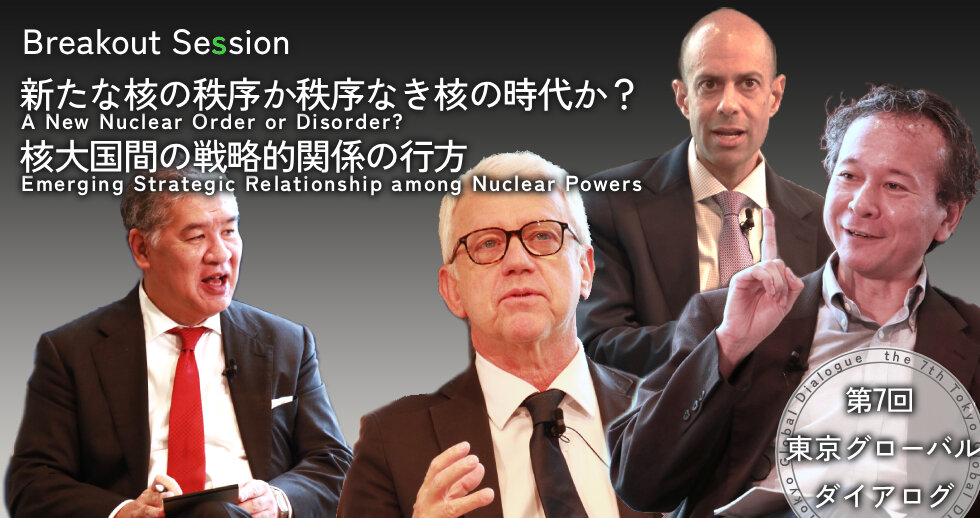

Breakout Session: A New Nuclear Order or Disorder?: Emerging Strategic Relationship among Nuclear Powers
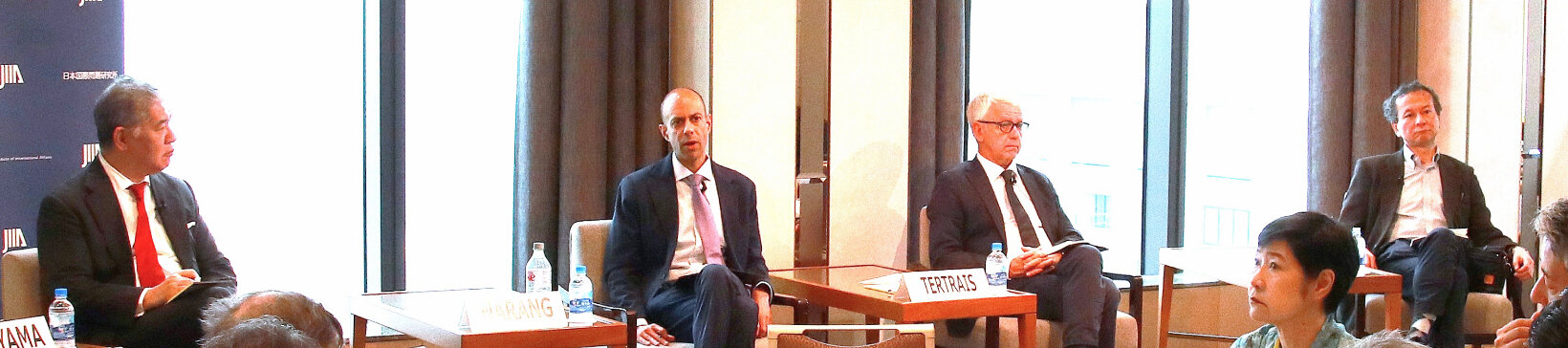
This session was conducted in a closed format under the Chatham House Rule.
The discussion examined whether the international system is entering a fundamentally new nuclear era or an extended period of strategic disorder. Panelists agreed that the assumptions underpinning the post-Cold War nuclear environment are under increasing strain. Intensifying competition between the United States, China, and Russia, the deterioration of traditional arms control mechanisms, regional security challenges, and the growing influence of emerging technologies dominated the discussion, with particular attention to their implications for deterrence, escalation, and strategic stability.
The perception that the nuclear order was stable during the Cold War is nothing more than a retrospective illusion, given that the era was marked by the risk of nuclear proliferation and intense competition. Today, however, the global nuclear environment has become substantially more unstable. Underlying this unpredictability are Russia’s moves to combine conventional military aggression with the threat of limited nuclear use, recent escalations such as the 2025 India-Pakistan crisis, and the rise of China as a new nuclear superpower that rejects the rules of the bipolar era.
As a result, within the reality of this newly emerged tripolar order, the arms control framework that had been built between the United States and Russia has become unsustainable. Future arms control efforts must prioritize practical and achievable steps—such as the establishment of a U.S.-China Nuclear Risk Reduction Center—rather than immediately pursuing ambitious treaties. At the same time, nuclear intimidation is intensifying as Russia deliberately blurs the boundaries of conflict and normalizes aggressive nuclear rhetoric. Furthermore, as evidenced by Ukraine’s bold attacks into Russian territory and Iran’s large-scale attacks on Israel, non-nuclear-weapon states are also beginning to test existing red lines.
In this complex environment, U.S. extended deterrence remains a crucial tool for nuclear nonproliferation, but its overall credibility is being undermined by ambiguous political signaling. The logic of deterrence varies significantly from region to region. In Europe, the efforts of France and the United Kingdom complement NATO and complicate Russia’s strategic calculations. Conversely, in the maritime-centric Indo-Pacific region, long-range conventional strike capabilities and a flexible hub-and-spoke alliance system are required to effectively counter China’s superiority in intermediate-range missiles.