


The 7th Tokyo Global Dialogue Breakout Session: Japan-ASEAN Cooperation in a Changing Regional Order: Toward a New Grand Strategy
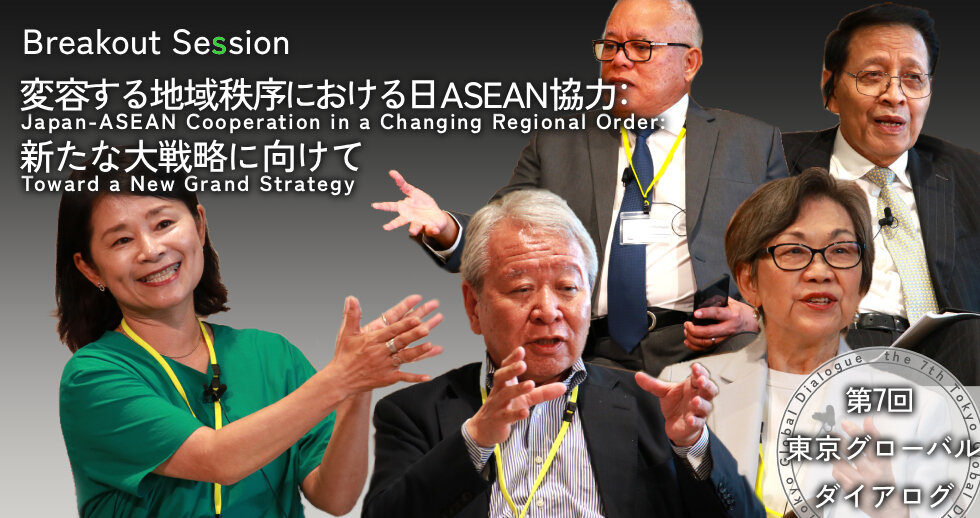

Breakout Session: Japan-ASEAN Cooperation in a Changing Regional Order: Toward a New Grand Strategy
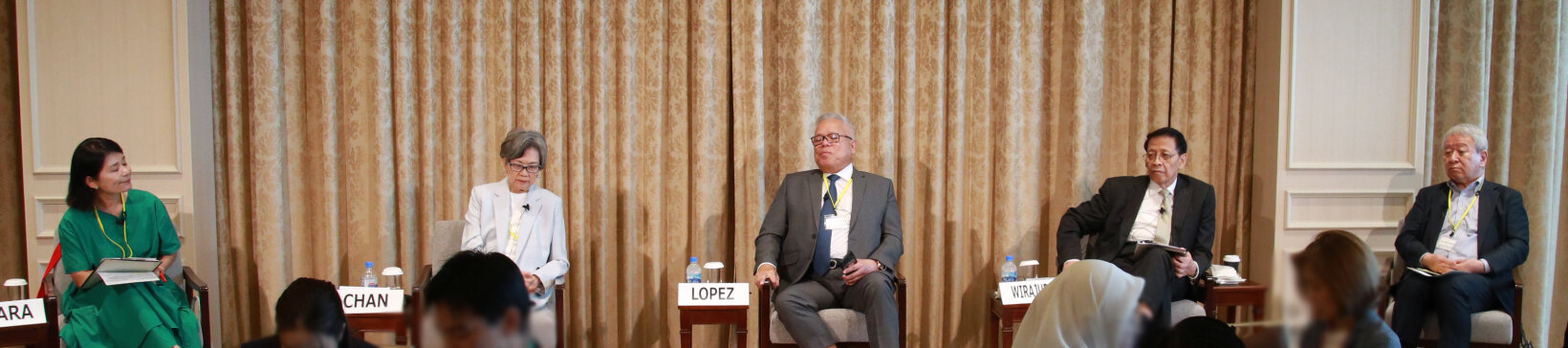
This session was conducted in a closed format under the Chatham House Rule.
This session featured a lively discussion on the opportunities and challenges for the Japan–ASEAN strategic partnership in response to the changing international order. The discussion was framed around three key perspectives: security, regional resilience, and a rules-based economic order.
The panel reaffirmed the complementarity of the Free and Open Indo-Pacific (FOIP), the ASEAN Outlook on the Indo-Pacific (AOIP), and the ASEAN Community Vision 2045, and shared the view that Japan and ASEAN should work together as equal partners in shaping the regional order. Four priority areas for cooperation were identified: (1) maintaining and strengthening a rules-based economic order; (2) enhancing energy security and regional resilience; (3) promoting practical cooperation in non-traditional security; and (4) expanding human resource development and people-to-people exchanges. In particular, participants underscored the importance of expanding a rules-based regional order through frameworks such as the CPTPP and RCEP, as well as through the development of soft law. They also highlighted the significance of Japan's Asia Zero Emission Community (AZEC) and the Partnership for Resilient and Reliable Power in Asia (POWERR Asia), together with the ASEAN Power Grid initiative and enhanced cooperation in renewable energy.
It was emphasized that ASEAN has traditionally managed border disputes and other conflicts within and beyond the region peacefully through dialogue, patience, and confidence-building, thereby maintaining a relatively stable regional order compared with other parts of the world. Japan was described as a trusted partner, and expectations were expressed that it would continue to contribute to maintaining and rebuilding the rules-based international order through technology, financial support, human resource development, and institution-building.
The session also attracted active participation from the audience, including young leaders from both Japan and ASEAN, such as JFSEAP Fellows and Short-Term Fellows of the Center for Territory and History, generating a lively and intergenerational exchange of questions and views.