


The 7th Tokyo Global Dialogue Session 1: Strategic Choices for an Uncertain Era
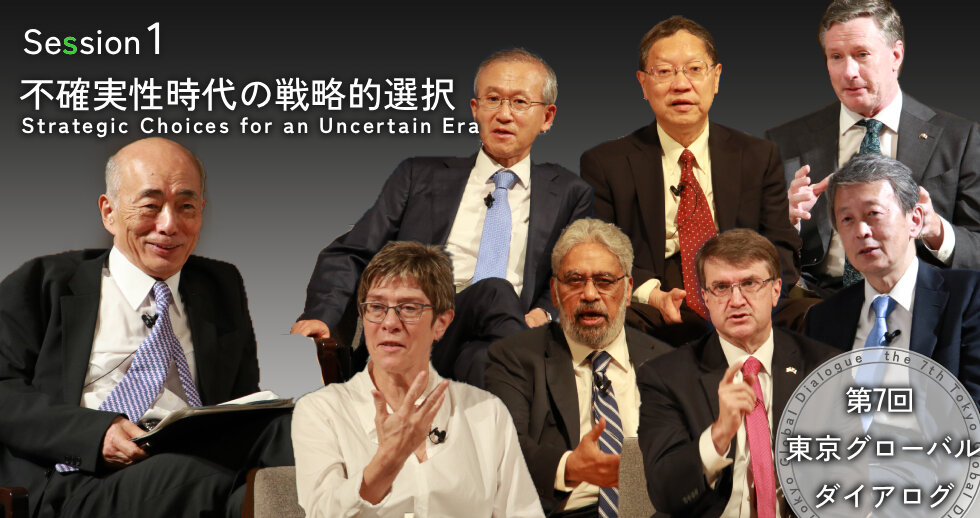

Session1 Strategic Choices for an Uncertain Era
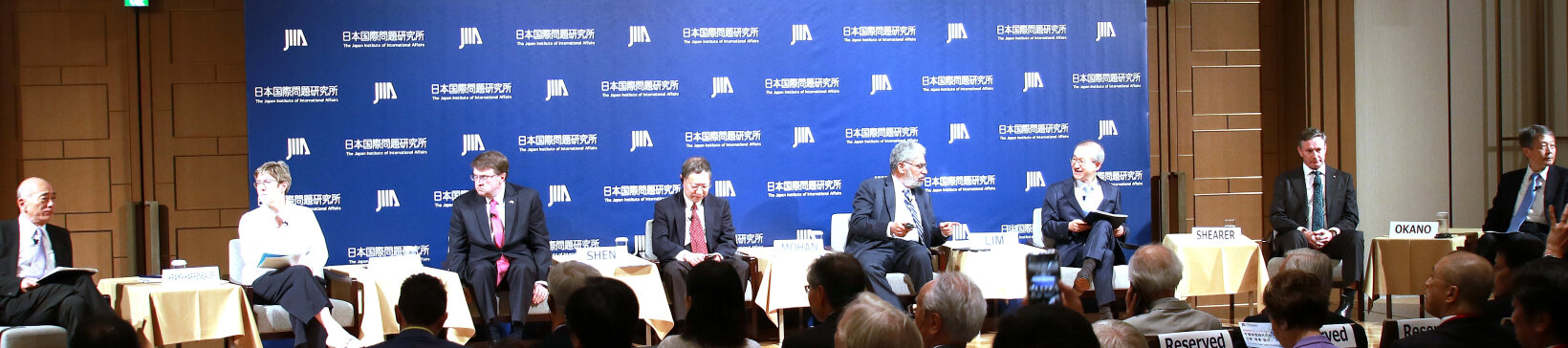
Candid views were exchanged on the overarching theme of this year’s Dialogue. In his opening remarks as moderator, President Sasae posed the central question of how the rules-based international order can be preserved while responding effectively to the realities of power politics. Throughout the discussion, panelists broadly agreed that credible deterrence remains indispensable for sustaining the rules-based international order. At the same time, they emphasized that deterrence alone is insufficient and must be complemented by national and societal resilience, diplomacy, responsible burden-sharing, closer cooperation among allies and partners, and sustained dialogue.
Rather than succumbing to pessimism or resignation in the face of growing uncertainty, panelists stressed the importance of developing strategic foresight, advancing domestic reforms, strengthening national capabilities, and deepening cooperation among like-minded countries. Against the backdrop of multiple concurrent developments—including shifts in U.S. policy, China's growing power and increasingly coercive behavior, Russia's war against Ukraine and its cooperation with North Korea and Iran, North Korea's nuclear and missile programs, and the rapid emergence of new technologies—panelists discussed how major powers and so-called middle powers should reassess their strategic assumptions.
With regard to the United States, panelists argued that assumptions of American decline are misplaced. The United States continues to possess overwhelming economic, technological, and military capabilities. However, uncertainty stems from how that power is exercised, changing U.S. willingness to provide international public goods, and the increasingly transactional nature of its "America First" foreign policy. It was also noted that the United States is not seeking to withdraw from either Europe or the Indo-Pacific, but rather expects its allies to assume greater responsibility for their own security. Panelists observed that allies are making greater efforts to share these responsibilities and that this shift in burden-sharing should also be viewed as an opportunity.
Speakers further emphasized that a rules-based international order cannot be sustained by principles alone but requires credible deterrence backed by the capability and willingness to act. At the same time, they observed that drones, artificial intelligence, cyber and space capabilities, data-enabled military systems, and other asymmetric technologies are fundamentally transforming the nature of warfare and deterrence. Gray-zone activities—including disinformation, cyberattacks, economic coercion, and pressure exerted through maritime law enforcement and paramilitary forces—are increasingly blurring the distinction between peace and conflict, thereby raising the risks of miscalculation. Against this backdrop, panelists stressed the need to strengthen not only conventional and nuclear deterrence but also defense industrial capacity, technological innovation, economic security, and whole-of-society resilience.
The discussion also underscored the importance of strengthening alliances, promoting more equitable burden-sharing, and expanding cooperation among like-minded countries across Europe and the Indo-Pacific. Panelists noted that developments in Ukraine, the Middle East, and the Indo-Pacific are increasingly interconnected, with conflicts in one region affecting deterrence, military resource allocation, and strategic decision-making in others. It was argued that countries such as Japan, the Republic of Korea, India, Australia, and Canada need not wait for comprehensive reform of existing multilateral institutions, but can instead play a proactive role in shaping practical rules through cooperation in such fields as defense, advanced technologies, trade, economic security, and maritime security.
Panelists expressed differing views on how best to respond to China's rise, growing tensions across the Taiwan Strait, and the changing military balance in the Indo-Pacific. Concerns were raised that China's expanding conventional, nuclear, maritime, cyber, and paramilitary capabilities are increasing regional instability and lowering the threshold for conflict. At the same time, many panelists emphasized the continued importance of U.S.-China dialogue, diplomacy, international law, and strategic restraint, arguing that "peace through strength" alone is insufficient to ensure long-term stability. It was also suggested that Japan should continue strengthening its defense capabilities and partnerships to prevent a strategic vacuum from emerging in the Indo-Pacific, while carefully managing its relationship with China and contributing to a stable regional order underpinned by credible deterrence and the rule of law.
Panelists concluded that the current transformation of the strategic environment exceeds even the scale of change witnessed at the end of the Cold War. China's rise, Russia's aggression against Ukraine, new forms of warfare, economic security challenges, and changes in U.S. foreign policy are unfolding simultaneously and reshaping the international system. In particular, panelists emphasized the importance of preventing any strategic vacuum from emerging in the Indo-Pacific as the nature of U.S. engagement evolves. The discussion also covered North Korea's nuclear and missile programs, the growing role of like-minded middle powers, demographic change, global economic rebalancing, climate change and the energy transition, as well as U.S.-China dialogue and developments concerning Taiwan.
The 7th Tokyo Global Dialogue Session 1: Strategic Choices for an Uncertain Era