


The 7th Tokyo Global Dialogue Session 2: Advancing Cross-Theater Cooperation in the Age of Strategic Flux
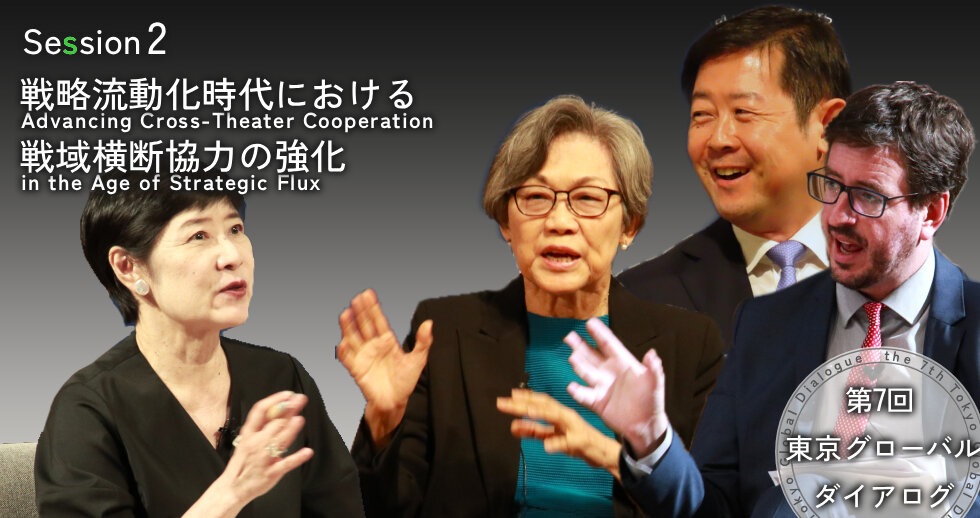

Session2 Advancing Cross-Theater Cooperation in the Age of Strategic Flux
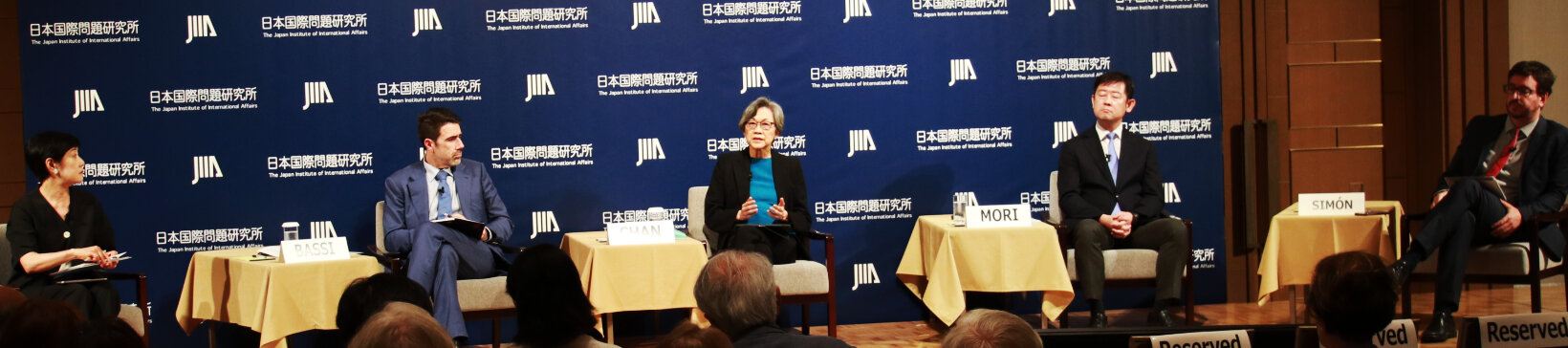
This session examined the future of cross-theater cooperation against the backdrop of the prolonged war in Ukraine, China's support for Russia, growing military cooperation between Russia and North Korea, and uncertainty surrounding the future of U.S. engagement. Panelists discussed how security challenges in the Indo-Pacific and Europe are becoming increasingly interconnected and explored ways to strengthen cooperation across regions.
Regarding the current security environment, panelists emphasized the growing importance of deterring and responding to threats from the hybrid warfare stage onward. While recent developments, including the U.S.-China summit and visits by European leaders to China, have created the appearance of greater stability in major-power relations, speakers noted that China's expanding gray-zone activities continue to pose a significant challenge. It was also argued that, as China, Russia, and North Korea deepen their strategic cooperation, the Indo-Pacific cannot effectively address these challenges without sustained U.S. engagement. Likewise, Europe's ability to pursue an integrated approach to security depends on continued U.S. political and military involvement, underscoring the importance of maintaining the U.S. commitment to both regions.
From the ASEAN perspective, panelists explained that threat perceptions are not uniform across Southeast Asia. While ASEAN welcomes the engagement of individual European countries and initiatives supporting the rule of law and freedom of navigation, its emphasis on inclusiveness leads it to take a more cautious approach toward NATO's institutional involvement in the region.
From the perspective of Japan, it was noted that Japan is strengthening security cooperation with Australia, the Philippines, and Southeast Asian partners, while maintaining the Japan-U.S. Alliance as the cornerstone of its security policy, with the aim of serving as a hub for regional security networks. Japan is also deepening security cooperation with Europe, with engagement with NATO forming an important part of this broader strategy.
The discussion also highlighted the growing interconnection between security in Europe and the Indo-Pacific. Panelists noted that China has become a strategic actor in both regions and that Europe and the Indo-Pacific share common security challenges not only in responding to gray-zone activities but also through their alliances with the United States. They emphasized the need to strengthen deterrence and crisis-response capabilities and argued that closer cooperation is also necessary to reinforce the U.S. defense industrial base and broader allied resilience.
Throughout the session, panelists agreed that cross-theater cooperation does not imply the creation of a single, integrated security architecture. Rather, they shared the view that the most practical and effective approach is to deepen cooperation in areas such as defense industrial collaboration, advanced technologies, critical minerals, cybersecurity, and responses to hybrid threats, while respecting the distinct strategic environments and threat perceptions of each region.
The 7th Tokyo Global Dialogue Session 2: Advancing Cross-Theater Cooperation in the Age of Strategic Flux