


The 7th Tokyo Global Dialogue Session 3: Reframing Economic Statecraft: National Strategy for Economic Power and Order
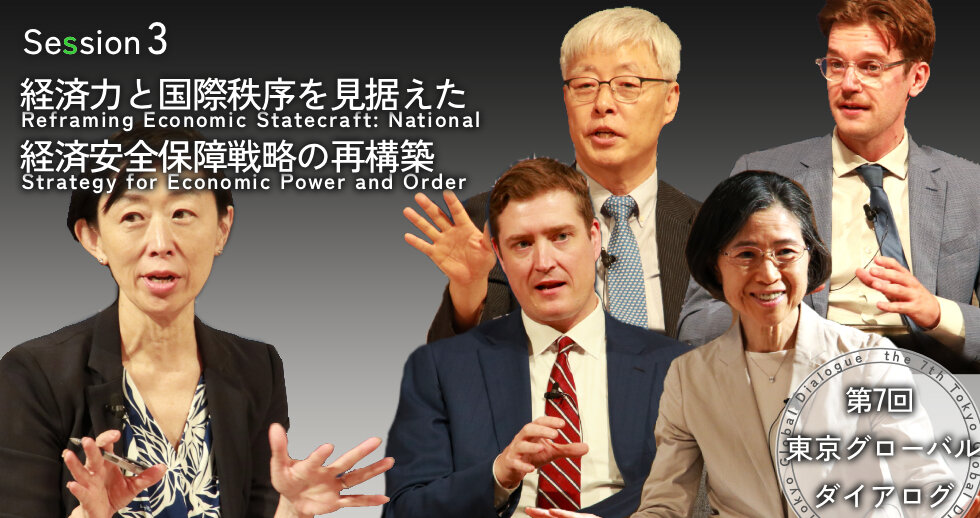

Session3 Reframing Economic Statecraft: National Strategy for Economic Power and Order
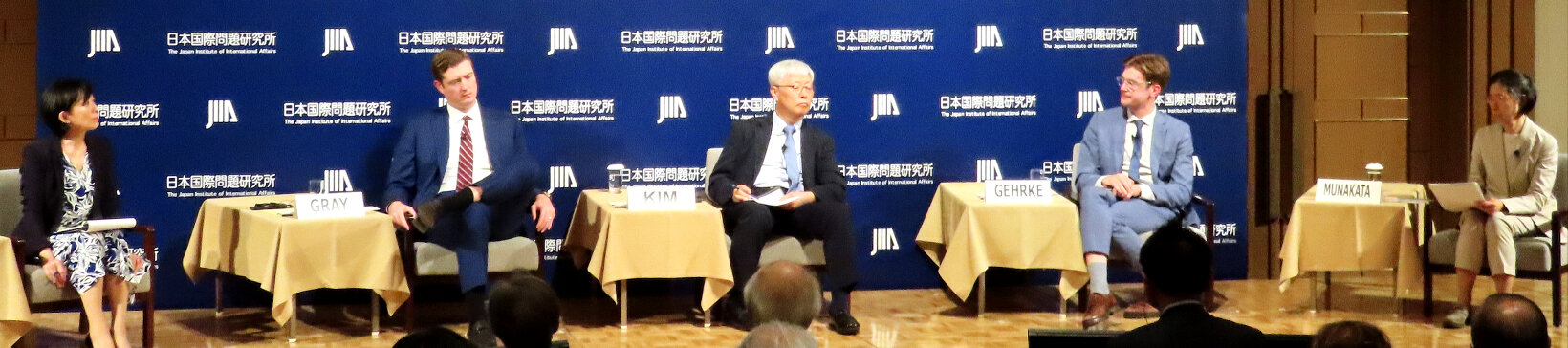
This session examined key issues surrounding economic security against the backdrop of intensifying U.S.-China strategic competition, the growing use of economic coercion, and the weaponization of economic interdependence. Panelists noted that strategic sectors—including semiconductors, critical minerals, artificial intelligence, batteries, electric vehicles, robotics, and pharmaceuticals—are not only engines of economic growth but also essential foundations of national security and strategic advantage. As a result, economic security and national security have become increasingly inseparable.
From the U.S. perspective, panelists observed that strategic competition with China has led to a significant expansion of government intervention in the economy through industrial policy, export controls, inbound investment screening, and the use of the Defense Production Act. It was suggested that this trend toward a more active state role in strategic industries is likely to continue regardless of changes in political leadership.
From the European perspective, speakers argued that stronger protective measures have become indispensable in response to China's industrial overcapacity, subsidies, state-led industrial policies, and economic coercion. They stressed the urgent need for more effective trade defense instruments and industrial policies, while also discussing how exceptions could be designed to avoid harming friendly economies. Panelists also referred to ongoing discussions in Europe regarding the possible introduction of an instrument comparable to Section 301 of the U.S. Trade Act.
From the Japanese perspective, it was noted that Japan had recognized the importance of economic security at an early stage. However, economic competition has now expanded beyond individual products and technologies to encompass the entire industrial ecosystem—from upstream resource procurement and intermediate processing to downstream markets, as well as data and artificial intelligence. Panelists therefore emphasized the importance of aggregating demand among like-minded countries and partners in order to create markets large enough to provide commercially and politically sustainable alternatives to China's vast economic scale.
From the Korean perspective, it was argued that globalization has significantly increased economic interdependence, making comprehensive de-risking unrealistic for many countries. Instead, efforts should focus on carefully managing a limited number of truly critical sectors. Panelists suggested that the international community has entered an era in which major powers must identify and safeguard those strategically vital sectors.
Throughout the discussion, panelists broadly agreed that market forces alone cannot adequately address these challenges and that governments must play an active role in achieving long-term strategic objectives. They emphasized that efforts to reduce dependency should be prioritized in sectors that are indispensable for national security, including defense industries, critical infrastructure, semiconductors, critical minerals, and pharmaceuticals, while strengthening overall resilience. Panelists also suggested that reaching advance agreement among like-minded countries on collective responses to economic coercion could itself serve as an effective deterrent. Others argued that, while escalation risks must be carefully considered, the more important objective is to establish a level of collective capability sufficient to ensure that economic coercion is ultimately ineffective.
Finally, panelists underscored the need for like-minded countries to develop "Trusted Markets" by creating new cooperative frameworks that combine common standards, demand aggregation, support measures, strategic stockpiling, and coordinated procurement rules for critical sectors. They also agreed that making full use of existing rules-based frameworks such as the WTO and the CPTPP, while strengthening the capacity of both governments and the private sector to manage uncertainty, will be essential for translating shared concerns into concrete collective action.
The 7th Tokyo Global Dialogue Session 3: Reframing Economic Statecraft: National Strategy for Economic Power and Order