


The 7th Tokyo Global Dialogue Session 5: FOIP at its 10th Anniversary: Charting the Next Decade of a Free and Open Indo-Pacific
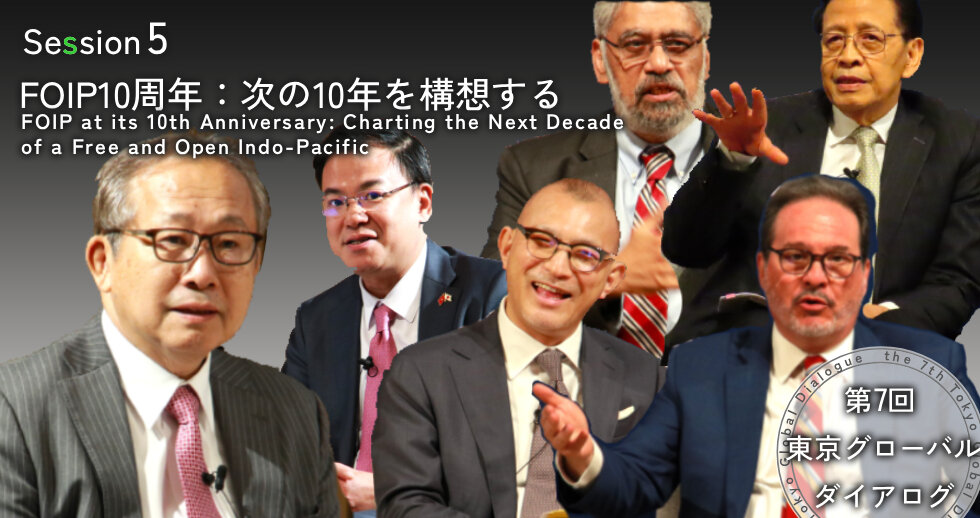

Session5 FOIP at its 10th Anniversary: Charting the Next Decade of a Free and Open Indo-Pacific
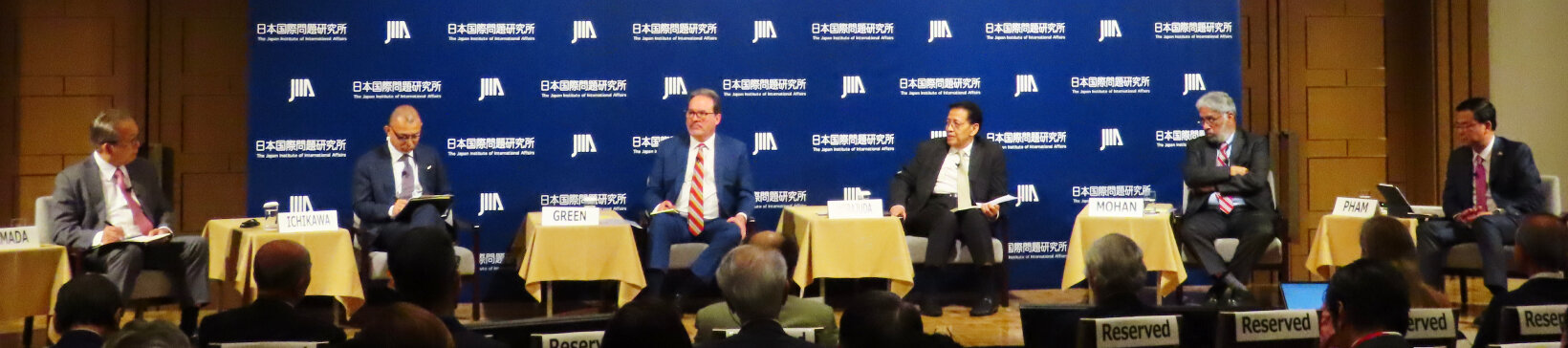
This session reflected on the first decade since the announcement of the Free and Open Indo-Pacific (FOIP) and building on the “updated FOIP” announced by Prime Minister Takaichi in May this year, discussed its direction for the next ten years. It was reaffirmed that FOIP has become one of Japan's most important diplomatic initiatives and has gained broad international support as a framework promoting the principles of freedom, openness, the rule of law, and inclusiveness.
Against the backdrop of intensifying geopolitical competition, the weaponization of economic interdependence, increasingly fragile supply chains, the rapid advancement of emerging technologies such as artificial intelligence, and growing concerns over resilient supply chains for food, energy and critical minerals, panelists agreed that FOIP must evolve beyond a strategic vision into a more practical framework to deliver tangible cooperation. More specifically, panelists emphasized that greater attention should now be given to strengthening national resilience and self-reliance, enhancing economic security, developing digital infrastructure for the AI and data era, ensuring stable supplies of energy and critical resources, and expanding maritime security cooperation.
Panelists also agreed that the complementarity between FOIP and the ASEAN Outlook on the Indo-Pacific (AOIP) and ASEAN centrality are indispensable to enhancing the legitimacy and effectiveness of FOIP in the region. They stressed the importance of developing practical cooperation that responds to the diverse needs of ASEAN member states. In addition, India's growing strategic role, the increasingly practical cooperation under the Quad, and the proactive engagement of ASEAN countries were identified as key factors that will shape the next decade of FOIP.
With regard to the United States, panelists noted that although domestic political developments create a degree of uncertainty, U.S. engagement in the Indo-Pacific remains strong in practical terms through its alliances, investment, technological cooperation, and defense partnerships.
TGD7 Session5 FOIP at its 10th Anniversary: Charting the Next Decade of a Free and Open Indo-Pacific