


The 7th Tokyo Global Dialogue Session 6: The United State in Transition: Choices for Japan and the World

Session 6: The United State in Transition: Choices for Japan and the World
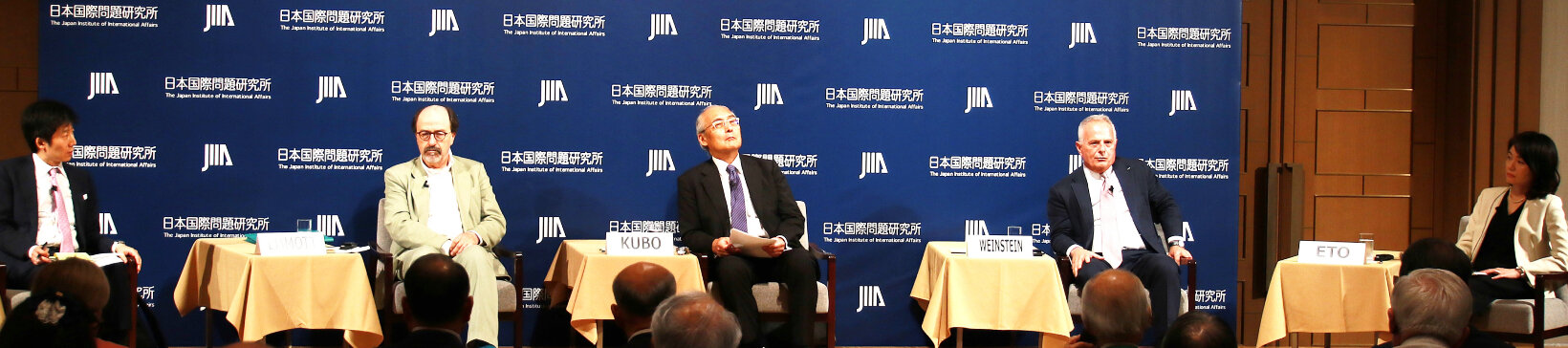
This session examined how Japan and other countries should respond as the United States undergoes significant political, social, and diplomatic transformation. Participants engaged in a constructive discussion on whether the Trump phenomenon should be viewed as a temporary deviation or as a reflection of deeper, long-term structural changes within American society.
During the panel discussion, participants noted President Trump’s unpredictability and transactional approach, while emphasizing that broader trends in the United States—such as inward-looking sentiment, anti-establishment attitudes, skepticism toward free trade, and increased demands for burden-sharing—are likely to persist beyond any single administration. It was also widely observed that, although the United States is not returning to isolationism, it increasingly regards alliances and the international order not only as expressions of shared values but also as strategic instruments for advancing U.S. national interests.
Regarding U.S.–China relations, participants discussed the possibility that the international system may evolve not toward a U.S.–China “G2” jointly managing global affairs, but toward an order shaped by competing spheres of influence. It was also highlighted that China is fully aware of the significant strength it possesses – its vast domestic market, manufacturing capacity, technological implementation capabilities, and its ability to shape narratives – and that it has been expanding its influence on the basis of these advantages. At the same time, it was underscored that China faces structural challenges, including the downturn in the property sector, demographic shifts, youth unemployment, and broader economic uncertainty. Accordingly, it was argued that China poses strategic risks both when strong and when economically weakened, requiring vigilance not only against military contingencies but also against gray-zone activities, cyber operations, economic dependence, and political influence efforts.
Participants also discussed the Global South, emphasizing that it should not be treated as a single geopolitical bloc but rather as a diverse group of countries gaining strategic autonomy through economic growth. These countries may contribute to a more stable international order by diversifying supply chains and markets, yet their reliance on Chinese AI and other low-cost technologies could draw them into new spheres of influence.
Throughout the discussion, participants agreed that Japan should further strengthen the Japan–U.S. Alliance and remain a trusted and indispensable partner for the United States. At the same time, Japan should mitigate the effects of a sphere of influence based international order by promoting free trade, upholding the rule of law, reinforcing international institutions, and deepening cooperation with the Global South. Participants concluded that Japan should pursue a dual strategy—combining adaptation to a changing strategic environment with sustained efforts to preserve and strengthen the rules based international order.
TGD7 Session6 The United State in Transition: Choices for Japan and the World