


The 6th Tokyo Global Dialogue Session 1: The New US Administration and International Order

Session 1: The New US Administration and International Order
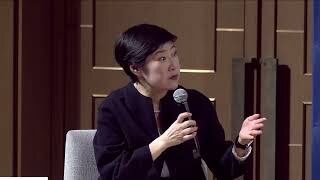
In this session, it was pointed out that although the second Trump administration has now been inaugurated, the policy community in Washington has not yet fully grasped the direction of the new administration, while it was also pointed out that President Trump does not pay attention to the interconnectedness of various initiatives, and that various policy groups will thus likely end up unified under President Trump.
It was pointed out that a certain degree of continuity was identified in the US’s Indo-Pacific policy through the Obama administration, the first Trump administration, the Biden administration, and the second Trump administration resulting from the strategic competition between the US and China. Ensuring channels for dialogue and enhancing trust between Japan and the US were then emphasized as recommended first moves following Trump's inauguration. It was also suggested that relations could be notably strengthened by directly explaining to President Trump at summit meetings what Japan and other countries are trying to do for themselves and what they can do for the US.
Attention was called to the increasingly severe security environment in the Indo-Pacific region and a recommendation was made that Japan voluntarily boost its defense capabilities commensurate with the actual dangers it faces, regardless of the returning President Trump’s advocacy of “peace through strength” and calls for increased defense spending by US allies.
The importance of emerging technologies such as cyber technologies, artificial intelligence (AI), and drones was also emphasized, as was the significance of Japan-US industrial cooperation in these areas. On Nippon Steel's attempt to acquire US Steel, there was a consensus that building industrial trust between the two countries will become even more essential in the future.
The necessity of understanding that tariffs are only a bargaining chip for the self-styled “Tariff Man” President Trump, of negotiating with an open mind, and of not harboring unreasonable fears of tariffs was stressed. It was also pointed out that the impacts of excessively high tariffs on the US economy, including inflation, should be closely monitored in the course of negotiations.
Many panelists expressed concerns about President Trump's lack of interest in the international order, the risk that he would make deals leaving allies out of the loop, and his readiness to impose punitive tariffs on countries that do not agree with his wishes. It was also pointed out that President Trump would play “bad cop” with Western leaders but “good cop” vis-à-vis President Putin and President Kim Jong-un in negotiations.