


The 6th Tokyo Global Dialogue Session 3: Europe’s Security and Its Implications to the Indo-Pacific

Session 3: Europe’s Security and Its Implications to the Indo-Pacific
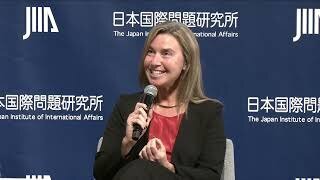
In this session, the main topic of discussion was the geopolitical implications of the Ukraine conflict. In his keynote speech, Estonian Minister of Defense Hanno Pevkur emphasized that Russia, supported by a new axis comprising North Korea, China, and Iran must not be allowed to win the war in Ukraine. Minister Pevkur also stated that the burden of the war must not be placed solely on Ukraine, and that democratic countries must support Ukraine and thereby raise the cost of the war for Russia. In this context, it was revealed that the defense spending of the Baltic countries already amounted to more than 5% of their GDP, with Estonia’s being the highest among them, and he called on all other NATO states to do more. Furthermore, Minister Pevkur then argued that ending the war would require guarantees of a just and lasting peace, including compensation for the damage caused by Russia to Ukraine, as well as sufficient coercive force, i.e., military strength, to achieve these.
The panelists discussed the impact of the war in Ukraine on global deterrence, particularly in the Indo-Pacific region. They also referred to the realities of Russian influence operations in Ukraine and agreed that the manner in which the war in Ukraine is ended will be of critical importance for deterring attempts to change the status quo in Asia. They also touched on the current situation in which the rise of far-right political parties and other manifestations of political turmoil in Europe and the US that are shaking up foreign policy and undermining democratic order. The importance of strategic communication, education, and international cooperation to counter disinformation and ensure democratic resilience was stressed.