


The 6th Tokyo Global Dialogue Session 5: Chokepoints in the Indo-Pacific: The Taiwan Strait, East and South China Seas, and the Korean Peninsula

Session 5: Chokepoints in the Indo-Pacific: The Taiwan Strait, East and South China Seas, and the Korean Peninsula
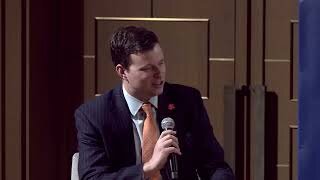
In this session, with the Taiwan Strait, the East and South China Seas, and the Korean Peninsula–all key geopolitical chokepoints in the Indo-Pacific–in mind, the panelists presented their analysis of the risks facing the security environment of the Indo-Pacific from their respective perspectives. The panelists also discussed how change in national leadership and their new foreign policies, such as the inauguration of the second Trump administration in the United States, would affect and change the Indo-Pacific region in the future, noting the intersection of domestic politics and foreign policy in each country. The panelists then discussed how the international community should respond to these risks and changes.
With regard to the Trump administration and the Indo-Pacific region, it was suggested that the Ukraine policy of the Trump administration would have a significant impact on chokepoints in the Indo-Pacific region. It was pointed out that depending on the direction of the Ukraine policy adopted by the Trump administration, it would affect the future actions of countries such as China and North Korea, and would also have an impact on the cooperation between North Korea and Russia, and that the outcome of the settlement of the Ukraine conflict would determine the Trump administration’s view and policy towards North Korea. On the other hand, it was explained that President Trump evaluates and judges his allies and like-minded countries based on two indicators: the GDP spent on national defense and the trade surplus/deficit with the US. It was also suggested that there may be fundamental changes in the relationship between the US and its allies and like-minded countries, and that it is important to develop multilateral cooperation within and across the region in order to properly manage the chokepoints in the Indo-Pacific.
There was also an expectation that the unpredictability of the Trump administration’s policies would act as a check on China’s foreign behavior and that China would maintain a cautious stance, including on the Taiwan issue. Therefore, there was a view that there would be no head-on collision between the US and China in the short term and that a relatively stable situation would continue. Regarding the domestic politics and the security environment of the Indo-Pacific, it was also pointed out that regardless of the political situation in South Korea, Japan-South Korea and Japan-US-South Korea cooperation and a free and open Indo-Pacific are important and should be developed.
On the other hand, several panelists argued that the Indo-Pacific is not so much a chokepoint as a region of “fault lines.” They noted that in this region, the ever-shifting balance of power among nations forms the basis of the security environment, and that given the high probability of conflict, each country is focusing its efforts on enhancing its national defense capabilities. They stressed the importance of preventing rash and ill-advised actions based on misinterpretations throughout the region, and of addressing conflicts and issues.
It was also pointed out that the US-led international order is facing challenges, resulting in loose alliances among countries such as China, Russia, North Korea, and Iran. It was suggested that these countries have a common national interest (a common point) in wanting to create a multipolar world, and that the US-led international order and these loose alliances are facing each other on the “fault lines.” It was emphasized that the threat and risk posed by North Korea should not be underestimated, and issues such as the future of North Korea’s relations with the US as it deepens its ties with Russia, and the dangers of North Korea’s nuclear doctrine, which has shifted from deterrence to the preemptive use of nuclear weapons, were discussed.