


International Symposium "Building U.S.-Japan Relations after the Second World War: Eight Decades of Security, Trade, and Trust" Held in Boston
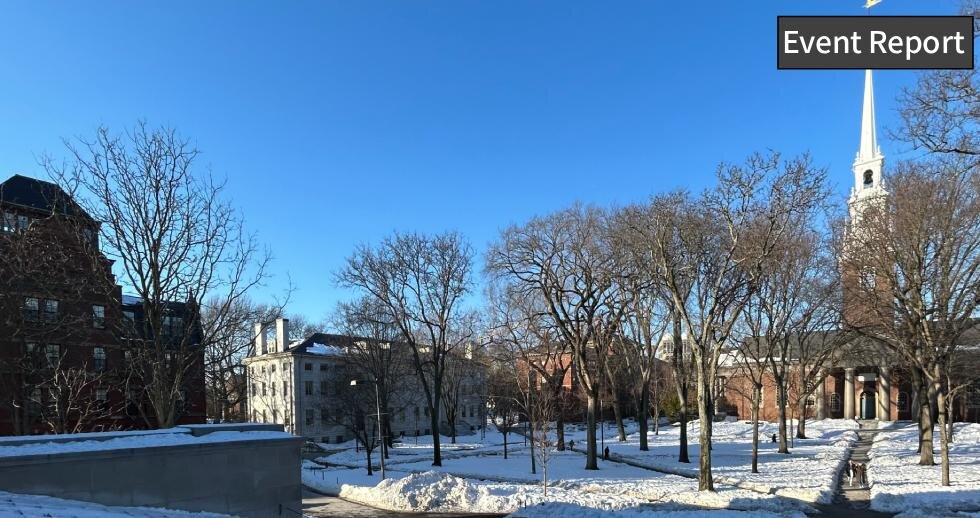

On February 6, 2026, the Japan Institute of International Affairs (JIIA), Harvard University’s Weatherhead Center for International Affairs, and the Edwin O. Reischauer Institute of Japanese Studies co-hosted an international symposium titled "Building U.S.-Japan Relations after the Second World War: Eight Decades of Security, Trade, and Trust" at Harvard University. The event was co-sponsored by the Japan Society of Boston, the Harvard Kennedy School Japan Caucus, and the Harvard Undergraduate Japan Policy Network (HUJPN). It was the first jointly hosted symposium with Harvard University since 2018.
The symposium aimed to reexamine Japan’s nation-building from the prewar to the postwar period through multiple perspectives, including security, economic diplomacy, the bureaucratic system, and the history of democracy. A defining feature of the presentations was the shared view that Japan’s postwar system should be understood not as a sharp break from the past, but as part of a broader historical continuum.
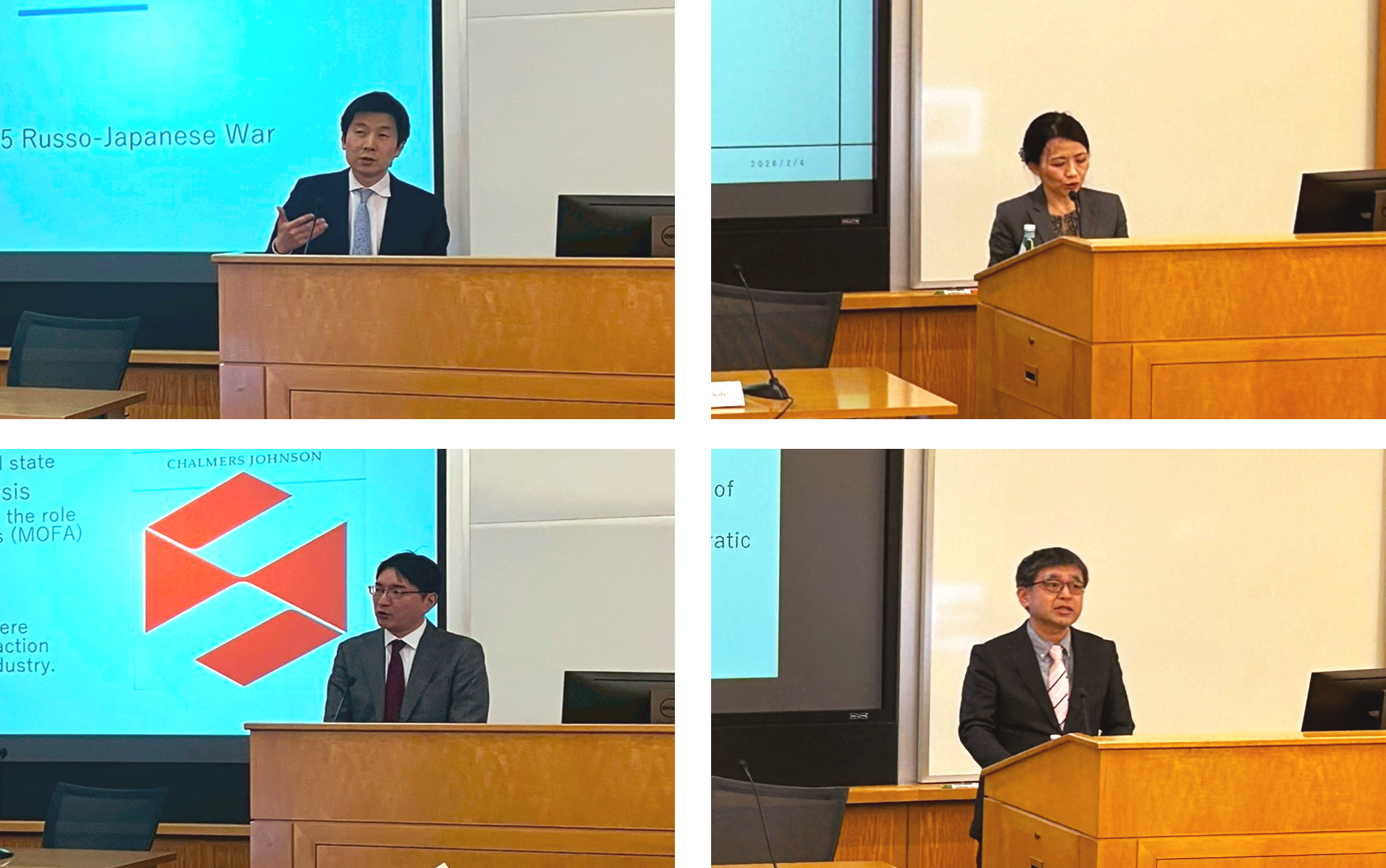
Clockwise from top left: Professor Iokibe, Professor Kusunoki, Professor Murai, and Professor Inoue.
In his report, "The Security of Japan, an Island State in the ‘Far East’: Past and Present,” Professor Kaoru Iokibe of the University of Tokyo framed Japan from a geopolitical perspective as an “island state in the ‘Far East’” and presented the strategic concept of “tracing back to the source.” He discussed historical strategies emphasizing the industrial, fiscal, and human resources underpinning military power, along with their risks and postwar inheritance.
Professor Masaya Inoue of Keio University analyzed the formation of postwar Japan’s “trading state” by examining the institutional competition and cooperation between the Ministry of Foreign Affairs and the Ministry of International Trade and Industry in his report, “Launching Japan’s Postwar 'Trading State': Bureaucratic Conflict between Diplomacy and Economic Agencies, 1945–1956.” He emphasized that Japan’s trade policy evolved inseparably from its diplomacy, demonstrating how it was closely tied to the emerging international economic order.
In her report, “The Dilemma of Dependence and Independence: The Linkage between Japan’s Economy and Security in the 1950s,” Professor Ayako Kusunoki of the International Research Center for Japanese Studies reexamined early 1950s Japan-U.S. relations through the lens of economic and security interdependence. She highlighted the structural dilemma Japan faced—seeking greater autonomy while inevitably relying on U.S. support.
Professor Ryota Murai of Komazawa University, in his report “Experiences, Perspectives, and Encouragements: Edwin and Haru Reischauer’s View of 20th-Century Japanese Democracy,” examined the historical continuity of Japanese democracy as reflected in the lives of the Reischauer couple. His analysis positioned postwar democracy not as something bestowed by the Occupation, but as a continuation of Japan’s intrinsic political development that had begun before the war.
Professor Susan Pharr of Harvard University served as the moderator, with Professors Andrew Gordon and Christina L. Davis serving as discussants. Professors Gordon and Davis praised the high quality of the presentations and offered specific questions for each report.
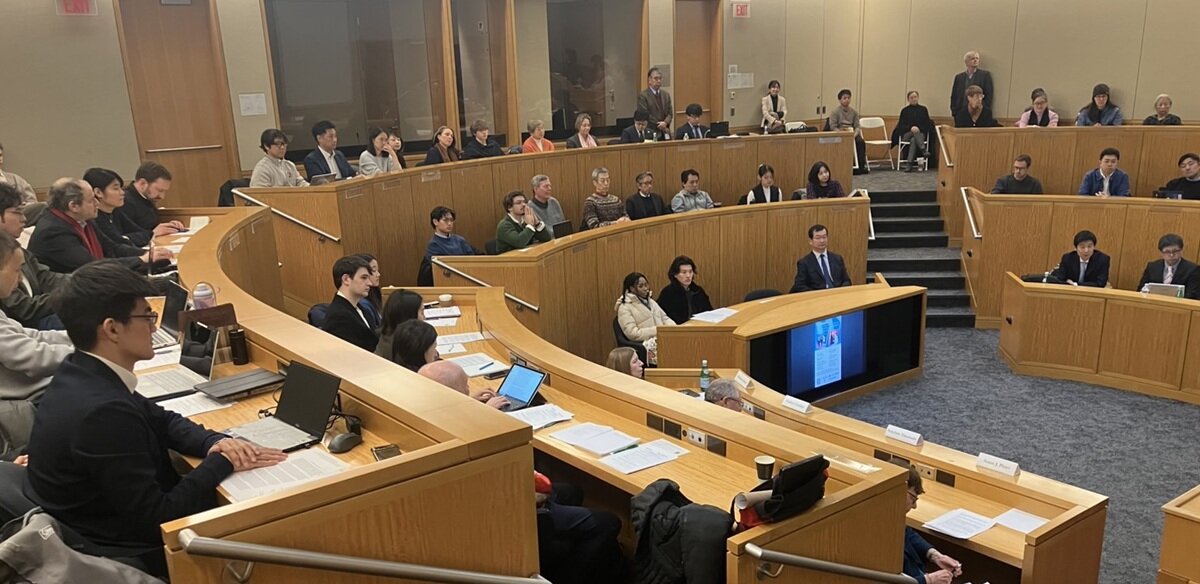
The event was a great success, drawing a full house. It featured lively question-and-answer sessions and active exchanges with local researchers and students, including those from Harvard University. The symposium also attracted a diverse audience, supported strongly by the local diplomatic mission, with opening remarks delivered by Consul General Seiichiro Takahashi of the Consulate-General of Japan in Boston. Through the local Japan Society, many Japanese residents in Boston also attended, creating an opportunity for participation not only by academics but also by practitioners and the broader Japanese community overseas. As a result, the symposium proved significant not only as a venue for historical and academic discussions on U.S.–Japan relations, but also as a community-rooted forum for dialogue.
Moderator:
Susan J. Pharr, Edwin O. Reischauer Research Professor of Japanese Politics; Senior Adviser, Program on US-Japan Relations, Harvard University
Discussants:
Andrew Gordon, Lee and Juliet Folger Fund Professor of History, Harvard University
Christina L. Davis, Edwin O. Reischauer Professor of Japanese Politics, Department of Government; Director, Program on US-Japan Relations, Harvard University
Speakers:
Kaoru Iokibe, Professor, Graduate Schools for Law and Politics, The University of Tokyo
Masaya Inoue, Professor, Faculty of Law, Department of Political Science, Keio University
Ayako Kusunoki, Professor, International Research Center for Japanese Studies
Ryota Murai, Professor, Faculty of Law, Department of Political Science, Komazawa University
Participants from JIIA:
Masao Kochi, Managing Director, Center for Territory and History, Senior Research Fellow
Leo Tamamizu, Research Fellow
Takeo Otani, Research Fellow
Related URL:
Weatherhead Center for International Affairs, Harvard University
Edwin O. Reischauer Institute of Japanese Studies, Harvard University
Consulate-General of Japan in Boston
Japan Society of Boston