JIIA Co-hosted the 8th Alexander C. Cushing International Law Conference in Seoul
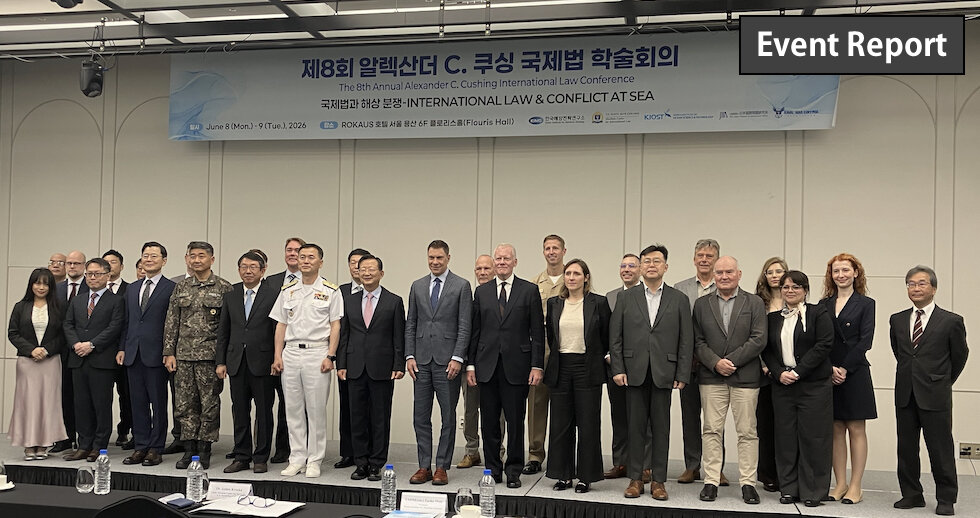

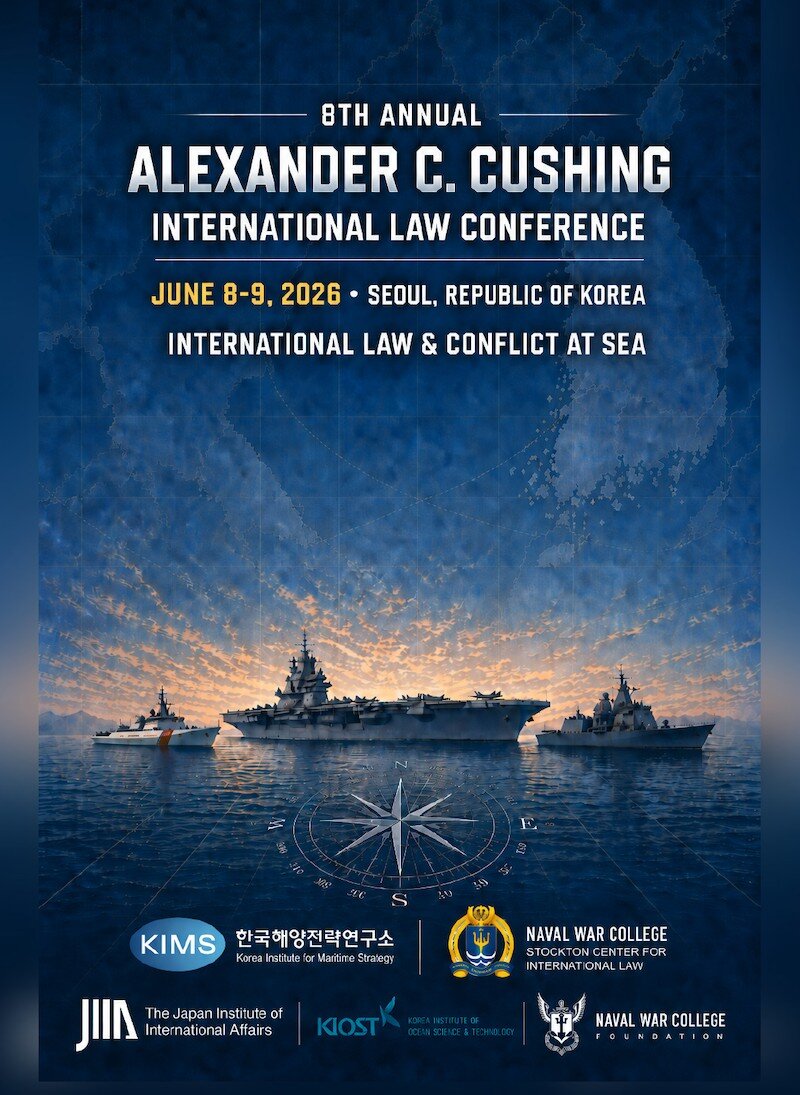
From June 8 to 9, 2026, the Japan Institute of International Affairs (JIIA), in cooperation with the U.S. Naval War College Stockton Center for International Law and the Korea Institute for Maritime Strategy, co-hosted the 8th Alexander C. Cushing International Law Conference in Seoul.
The conference brings together leading scholars and practitioners in the fields of international law and maritime policy to engage in comprehensive discussions on a wide range of maritime security challenges. Held annually, the conference aims to advance the rule of law at sea through the practical application of international law by defense and security practitioners, while fostering greater shared understanding among states.
This year’s conference addressed a broad range of issues, including gray-zone situations, the legal protection of undersea infrastructure, technological developments, security cooperation, deep-sea mineral resource exploration, and Maritime Autonomous Surface Ships (MASS). Participants also exchanged views on the legal implications of recent developments surrounding the Strait of Hormuz and their potential implications for East Asia.
To advance discussions on establishing the rule of law in the maritime domain, JIIA supported the participation of three experts, each of whom made important contributions to the conference.
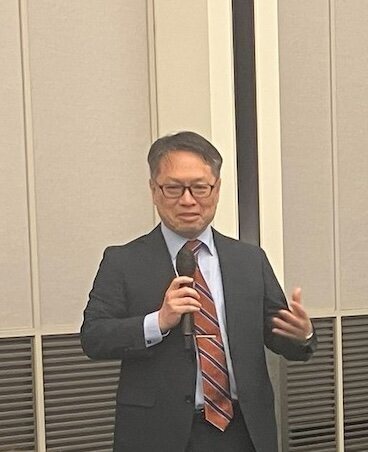
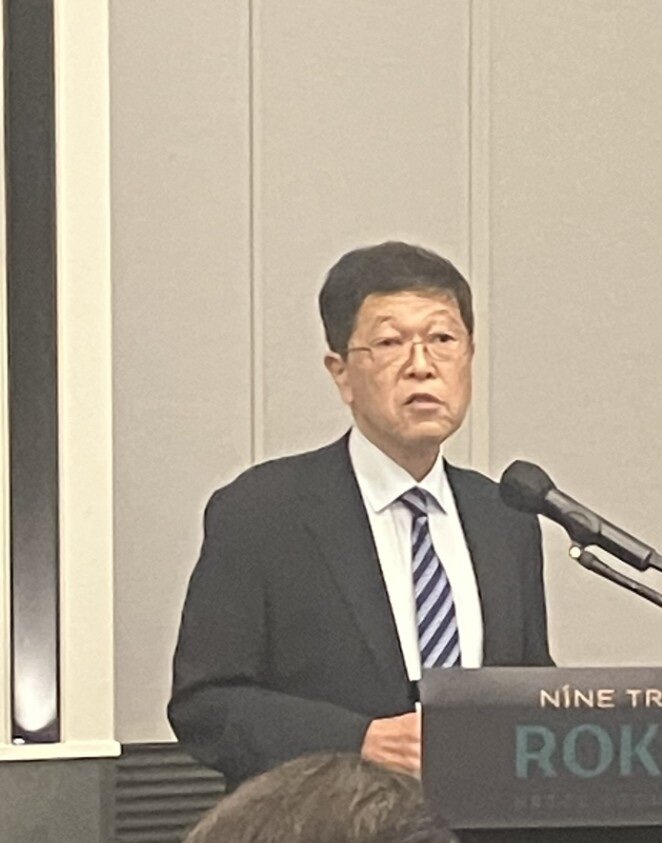
In his keynote address, Hideshi Tokuchi, President of the Research Institute for Peace and Security, emphasized that institutionalizing Japan–U.S.–ROK cooperation is essential for maintaining regional stability in East Asia amid growing challenges to the rules-based international order, including unilateral attempts to alter the status quo through territorial claims.
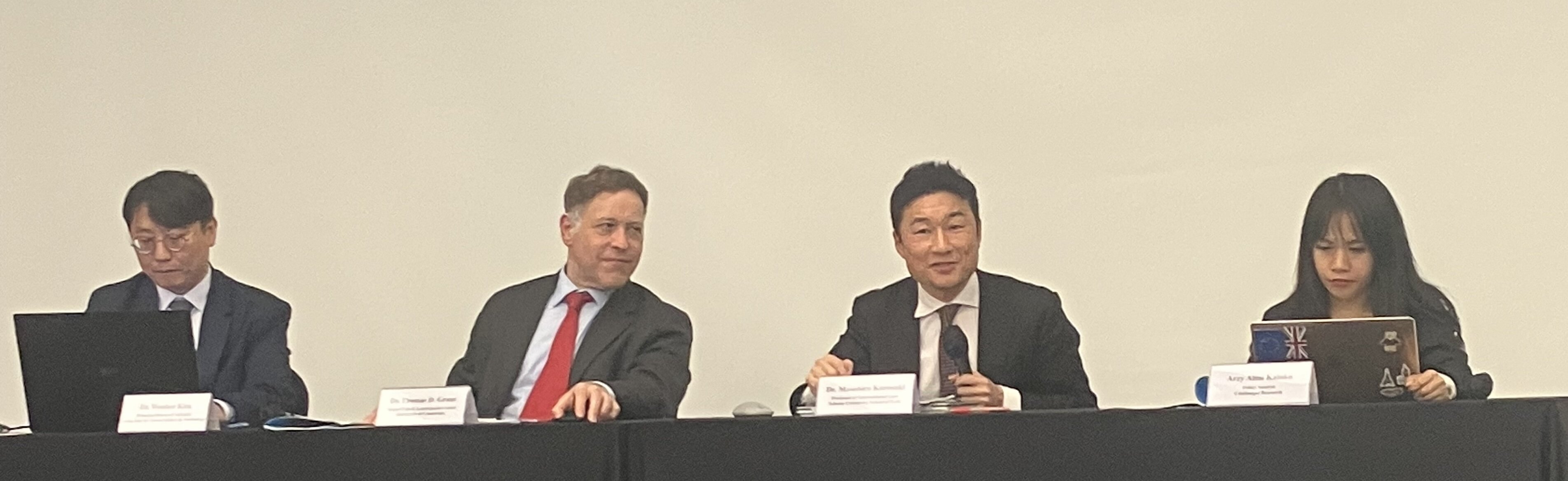
Masahiro Kurosaki, Professor at Tohoku University, examined how the concepts of “warships” and “naval auxiliary vessels” are evolving in response to advances in unmanned technologies. He highlighted the need to identify and redefine applicable legal frameworks for future maritime armed conflicts. Such ambiguity surrounding these definitions could create risks of arbitrary interpretations of international law and their exploitation in gray-zone strategies.
Rear Admiral (ret.) Katsuya Yamamoto, Director of the Strategy and Deterrence Group at the Sasakawa Peace Foundation, addressed the issue of “double standards” in the application of international law. Examining inconsistent interpretations of legal principles concerning international straits and adjacent waters, he warned that attempts to establish faits accomplis could undermine the foundations of the United Nations Convention on the Law of the Sea (UNCLOS), including freedom of navigation, and weaken the maritime order based on the rule of law.
Through its support for the participation of the three experts, JIIA contributed to stimulating substantive discussions among participants and promoted greater awareness of critical issues concerning the maritime order, many of which are closely connected to territorial disputes.