


Prime Minister Sanae Takaichi’s Remarks and Japan–China–Taiwan Relations—The Logic Behind China’s Unyielding Position
Shin Kawashima(Professor, The University of Tokyo Graduate School of Arts and Sciences)
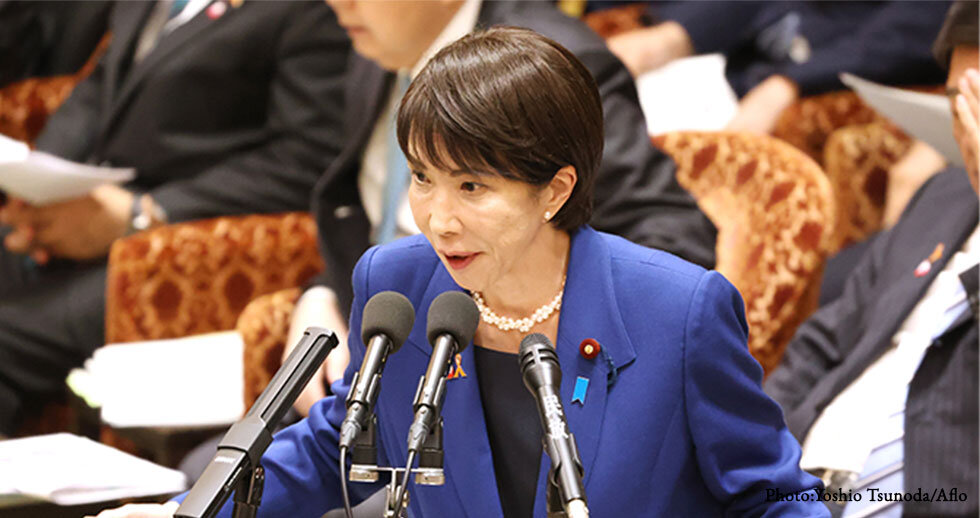

Prime Minister Sanae Takaichi’s remarks regarding a “survival threatening situation” may be interpreted as meaning: “If China were to launch a military attack on Taiwan, and U.S. forces were deployed to the Taiwan Strait or elsewhere, Japan might exercise its right of collective self-defense and engage in some form of cooperation with U.S. forces, which could include the use of military force.” This interpretation does not deviate from the conventional position of the Japanese government. However, this was the first time since the enactment of the so-called security legislation that a prime minister had cited a specific hypothetical case. Because there was no clarification that the exercise of collective self-defense applies solely to Japan–U.S. relations and is not intended between Japan and Taiwan, her comments have sparked considerable debate within Japan.
From the perspective of Japan–China relations, Prime Minister Takaichi’s remarks are being used by China as a pretext to update and shift its policy toward Japan. China is promoting the narrative that “Japan is the one changing the status quo” and disseminating this message both domestically and internationally. In China’s discourse, the scope of Japan’s right of collective self-defense, what constitutes survival threatening situations, and the fact that this right applies only to Japan–U.S. relations and is not envisioned between Japan and Taiwan are omitted. Instead, China is criticizing Japan by reframing the terminology, using expressions such as “military intervention,” “participation in war,” and “act of aggression against China.” Furthermore, it has reinstated the ban on imports of Japanese seafood, as if turning back the clock, and appears to have suspended Japan-China summit meetings.
China’s Response Reminiscent of 2012
The current situation is reminiscent of the dispute over the Senkaku Islands in September 2012. At that time, the Japanese government purchased three privately owned Senkaku islands to bring them under state ownership. China reframed this as “Japan bought the islands to nationalize them,” and widely publicized the move, both domestically and internationally, as a “change to the status quo by the Japanese government.” In response to the purchase, China suspended high-level exchanges, organized anti-Japan demonstrations, and significantly altered the activities of its government vessels in the territorial waters and contiguous zones surrounding the Senkaku Islands. In this way, China effectively “updated” its policies.
The Japanese government’s actions at the time were aimed solely at blocking attempts to build facilities such as lighthouses on privately owned land, thereby maintaining the status quo around the Senkaku Islands, with no intention of altering it— contrary to China’s claims. However, China’s narrative—that Japan “bought the islands” and thus asserted sovereignty—was widely disseminated both within and outside China. In reality, it was China that changed the status quo, beginning with the incident on December 8, 2008, when an official Chinese vessel entered the territorial waters surrounding the Senkaku Islands for the first time.1
However, there are also notable differences from 2012. While anti-Japan protests have not been organized this time, China has not only engaged in extensive publicity both domestically and internationally in multiple languages, including Japanese, through various media such as social networks, but has also undertaken operations aimed at fomenting divisions within Japanese society—going beyond mere propaganda. Within the Chinese Communist Party, propaganda is typically carried out by the Publicity Department, while efforts to create internal divisions among targeted groups are often managed by the Central United Front Work Department (UFWD). Both the Japanese government and society must take comprehensive measures to counter China’s information warfare and cognitive warfare.
Transformations in Cross-Strait (China–Taiwan) Relations: Eight Decades after World War II
What, then, accounts for China’s uncompromising response to Prime Minister Takaichi’s remarks about a survival-threatening situation? The author contends that introducing a supplementary view—namely, China-Taiwan relations, or cross-Strait relations—could sharpen the analysis.
Prime Minister Takaichi has maintained close ties with Taiwan’s Democratic Progressive Party (DPP) and President Lai Ching-te, continuing the ties she developed as a lawmaker. She even visited Taiwan at the end of April 2025 and held talks with the President. It must be noted that Prime Minister Takaichi herself had been attempting to follow the approach adopted by former Prime Minister Shinzo Abe, which involved distinguishing between his position as a lawmaker and his position as prime minister. Refraining from visiting Yasukuni Shrine is one such example, and the same likely applied to relations with Taiwan.
China has been reacting with extreme sensitivity to the relationship between the newly elected Prime Minister Takaichi and President Lai. Since the DPP administration, led by former President Tsai Ing-wen, took office in May 2016, China has revised its Taiwan policy. Rather than cooperating with the Kuomintang (KMT), it shifted to pursuing unification by cultivating “patriotic unification forces”—namely, individuals in Taiwan who favor unification. To this end, China sought to steer the Taiwanese people toward unification by infiltrating society and corporations. It went on to condemn the DPP administration as “pro-independence” and began criticizing everything associated with the DPP and President Tsai. China even began targeting activities with established precedents, such as exchanges between members of the DPP and Japan’s Liberal Democratic Party (LDP), as well as visits by Japanese local government leaders to Taiwan’s president. In doing so, China has raised the stakes for itself.
The year 2025, marking the 80th anniversary of the end of World War II, witnessed heightened tensions between China and Taiwan amid heated exchanges over historical perceptions. In early May, Chinese President Xi Jinping reaffirmed China’s sovereignty over Taiwan in an article titled “Learning from History to Build Together a Brighter Future,” citing the Cairo Declaration and the Potsdam Declaration as its foundation. The piece was published in conjunction with Russia’s celebration of the 80th anniversary of its victory over Germany. 2In response, President Lai rejected the People’s Republic of China’s claim of sovereignty over Taiwan, invoking the San Francisco Peace Treaty during a speech at the end of June. 3On August 15, President Lai issued a statement saying, “Eighty years later, on this day—the anniversary of the end of the war” 4China, along with Taiwan’s KMT and other groups, strongly protested, asserting that this day should be regarded as “Restoration” and “Victory in the War of Resistance Against Japan” Memorial Day. On August 18, in response to President Lai’s series of remarks, a spokesperson for China’s Ministry of Foreign Affairs declared the San Francisco Peace Treaty invalid and completely rejected President Lai’s statements.5
The Birth of the New Takaichi Administration and Japan–China–Taiwan Relations
Amid heightened tensions in cross-strait relations, on October 4, 2025, Sanae Takaichi was elected president of the LDP in its leadership election. President Lai extended his congratulations, 6while China criticized the use of the term “the two countries, Taiwan and Japan” in this context. Furthermore, on October 21, when the new Prime Minister Takaichi took office, President Lai again offered congratulations on social media, calling her “a steadfast friend of Taiwan” and describing Japan-Taiwan relations as “a solid partnership based on shared values,” while expressing hope that this relationship will advance to a new stage. Three days later, on October 24, the Standing Committee of the National People’s Congress (NPC) decided to designate this date as the “Commemoration Day of Taiwan’s Restoration,” marking the end of Japan’s rule over Taiwan on October 25, 1945.7
On October 24, in Japan, newly appointed Prime Minister Takaichi delivered her policy speech to the Diet. On security issues, while expressing “grave concern” about China, she also referred to China as “an important neighboring country for Japan,” emphasizing the need to “establish a constructive and stable bilateral relationship.” She further pledged to “comprehensively promote a mutually beneficial relationship based on common strategic interests through continued candid dialogue between the leaders of Japan and China.” 8There was no mention of Taiwan. A week later, on October 31, during a visit to South Korea to attend the Asia-Pacific Economic Cooperation (APEC) meeting, the two leaders held a Japan-China summit. Although the minutes released by the two countries’ foreign ministries differed significantly, they agreed on key points such as “establishing a constructive and stable relationship,” “promoting a mutually beneficial relationship based on common strategic interests,” and the importance of dialogue. For Prime Minister Takaichi, this was likely part of a diplomatic approach that distinguished her stance as a lawmaker from her stance as prime minister.
The day after the Japan-China summit, on November 1, Prime Minister Takaichi met with Taiwan’s representative to APEC, Lin Hsin-i, former vice premier of the Executive Yuan. Meetings between Japanese prime ministers and Taiwanese representatives at APEC have many precedents, including those held by former Prime Minister Abe. However, since the late 2010s, China has raised the stakes on the Taiwan issue by harshly criticizing the DPP administration as pro-independence and condemning even meetings with former President Tsai Ing-wen, President Lai, or other DPP officials—regardless of precedent. Moreover, in recent times, tensions with the Lai administration had been increasing over historical issues. For these reasons, China strongly protested Prime Minister Takaichi’s meeting with the Taiwanese representative at APEC.
Prime Minister Takaichi’s remarks in the Diet regarding a “survival-threatening situation” were made on November 7. While it was unusual for the Prime Minister to delve into a specific case, the substance of the remarks aligned with the Japanese government’s existing policy. However, China appears to have seized on these comments to claim that Japan is attempting to change the status quo and, in doing so, has launched strong countermeasures aimed at driving a wedge into Japan-Taiwan relations.
Subsequently, the United States has refrained from endorsing Takaichi’s remarks outright, sticking instead to reiterating principles without addressing individual cases. This likely leads China to believe it can exploit the situation to pursue a divide-and-rule policy between Japan and the U.S. Furthermore, the fact that domestic debate in Japan is divided also seems advantageous from China’s perspective.
Can a New Four-Point Consensus Be Formulated?
China’s ultimate goal is not the normalization of Japan–China relations, but rather the “updating” of its policy toward Japan, including issues related to Okinawa and Taiwan. It seeks to craft and implement a narrative that Japan has “changed the status quo” in line with China’s own intentions. Once that process settles, China aims to create the appearance of having normalized relations to a certain extent. The exact nature of this “update” remains unclear, but it may involve not only military dimensions, but also a redefinition of Taiwan’s position within Japan-China relations.
In the September 2012 incident, China “updated” its activities in the waters surrounding the Senkaku Islands, making the intrusion of government vessels into Japan’s territorial waters and contiguous zone a routine occurrence. In November 2014, Japan and China reached a four-point consensus between the second Abe administration and the Chinese government, 9and later that month, a summit meeting was held—albeit without national flags behind the leaders—gradually easing tensions. 10By October 2018, with former Prime Minister Abe’s visit to China, relations had nearly normalized. However, the activities of Chinese government vessels around the Senkaku Islands, first “updated” in 2012, have continued to this day.
Japan does not need to yield to China over the recent remarks concerning a “survival-threatening situation,” nor accept the high stakes China has set. However, peace and stability in East Asia, as well as in the Taiwan Strait, are also in Japan’s national interest. Therefore, it is essential to determine what China’s policy “update” entails, minimize its impact as much as possible, and respond appropriately to the aforementioned information and cognitive warfare. In addition, formulating a consensus between Japan and China comparable to the four-point consensus of 2014 and normalize bilateral relations to a level that allows for summit meetings will be a key challenge for the government and diplomatic authorities going forward. Needless to say, this will be anything but an easy task.
This is a translation of the Japanese article originally published on Sinology-Initiative.com (中国学.com) on November 26, 2025.
The original Japanese article can be found at (https://sinology-initiative.com/international-relations/3025/).