


- #Japan
- #Americas
- #Indo-Pacific
- #Economy & Global Issues
- #JIIA Center for Global Outreach (CGO)
- #Japan's Voices
[Japan’s Voices No.1] The Disintegration of the World Order and Its Reconstruction — Japan’s Mission
Akio Takahara (Senior Adjunct Fellow, The Japan Institute of International Affairs)
![[Japan’s Voices No.1] The Disintegration of the World Order and Its Reconstruction — Japan’s Mission](/eng/upload/eng/20260209.jpg)

The Disintegration of the World Order
The international order is disintegrating before our very eyes.
In January 2026, US forces carried out an operation to detain Venezuelan president Nicolás Maduro and his wife and transported them to the United States. This followed Russia’s annexation of Crimea in 2014 and its full-scale invasion of Ukraine eight years later. After the operation in Venezuela, President Trump stated, “My own morality, my own mind—it’s the only thing that can stop me,” adding, “I do not need international law.”
Meanwhile, in East Asia, the Chinese government has continued coercive actions against the Philippines, despite the 2016 ruling by an international arbitral tribunal that found no legal basis for China’s claims in the South China Sea.
Since internal social polarization within many countries has intensified in the aftermath of the 2008 global financial crisis, instability in the international order has grown more pronounced. World history appears to have entered a new phase.
The Collapse of the Post-World War II Order
In the first half of the twentieth century, humanity experienced two devastating world wars. The international order of the past eighty years was forged by drawing lessons from those catastrophic failures. One pillar of the post–World War II order consisted of fundamental principles such as the sovereign equality of states, the peaceful settlement of international disputes, and restraint in the threat or use of force. While privileges were granted to the permanent members of the UN Security Council, it was nevertheless agreed that even great powers should not impose their will on others through brute force.
Another pillar was the promotion of free trade. This idea derived from the solemn reflection that the formation of closed economic blocs had contributed to the outbreak of catastrophic wars. These principles were codified in the UN Charter and the General Agreement on Tariffs and Trade (GATT), forming the normative framework that governed international relations after World War II.
International order can be understood, in simple terms, as a condition in which international relations remain stable. Stability derives from predictability in state behavior, and predictability, in turn, rests on shared norms. After World War II, a consensus emerged regarding the values and norms underpinning international order, with robust support from the permanent members of the UN Security Council.
To be sure, these values and norms were not always upheld. Soviet tanks crushed the Prague Spring, and the United States carried out military operations against Iraq and overthrew the Hussein regime. Yet today’s situation differs fundamentally. The world’s three major powers—the United States, China, and Russia—are now all engaging, both domestically and internationally, in behavior that contradicts the postwar rules-based order.
The Trump administration has expressed an intention to acquire Greenland, a territory of Denmark, and had previously suggested that the use of force might not be ruled out. Its commitment to supporting Ukraine against Russia’s ongoing invasion has at times been equivocal. The rhetoric of senior Trump officials toward Europe mirrors their domestic attacks on traditional elites, often derided as “woke.” This populist backlash against established authority has been amplified by the proliferation of social media, which enables anyone to broadcast their views instantaneously.
BRICS as an Arena for Emerging Powers
At the same time, new trends among major powers are influencing emerging and developing countries, often referred to as the Global South. Of particular note is the expansion of BRICS. Heads of state and government from a wide range of countries participated in the leaders’ summit held in Brazil in July 2025.
In addition to the original five BRICS members, Iran, Egypt, the United Arab Emirates, and Ethiopia, which joined in 2024, as well as Indonesia, which joined in 2025, were represented. Partner countries—including Belarus, Bolivia, Kazakhstan, Cuba, Nigeria, Malaysia, Thailand, Vietnam, Uganda, and Uzbekistan—also participated.
The role BRICS may ultimately play in the world remains uncertain. Yet it has already become a major diplomatic arena that cannot be ignored. The Rio de Janeiro Declaration issued at the 2025 BRICS summit condemned in the strongest terms attacks on bridges and railway infrastructure in Russia in May and June of that year as intentional attacks on civilians, although it did not explicitly name Ukraine. At the same time, the declaration made no reference whatsoever to Russia’s invasion of Ukraine or to the killing of civilians there. This clearly demonstrated Russia’s ability to leverage BRICS for its own purposes.
Why, then, did even Indian Prime Minister Narendra Modi endorse the declaration?
First, from India’s perspective, President Trump appears not to fully appreciate India’s strategic importance. The Trump administration imposed high tariffs on India—a proud nation unwilling to curry favor—and claimed credit for mediating the ceasefire that followed the May 2025 India–Pakistan clashes. These actions strained US–India relations and cast a shadow over India’s behavior within BRICS. Brazil, the summit’s host, had also experienced similar treatment from the Trump administration over tariffs.
Second, the Rio Declaration strongly condemned a terrorist attack that had occurred in Jammu and Kashmir in April of that year. This marked the first time BRICS had addressed such an incident attributed to terrorists based in Pakistan, enabling India to achieve a long-sought diplomatic objective.
Notably, the defense ministers’ meeting of the Shanghai Cooperation Organization (SCO), held in Qingdao, China, in June of the same year, ended without a joint statement. This was because language condemning the terrorist attack in Jammu and Kashmir was omitted from the draft, prompting India’s defense minister to refuse to sign it. Following the July BRICS summit, however, the SCO Council of Heads of State convened in Tianjin in early September and issued a joint declaration explicitly condemning the attack. This indicated that China, serving as the SCO’s chair for the year, had shifted its stance and, despite its close partnership with Pakistan, leaned toward India.
Nevertheless, Prime Minister Modi declined to attend the military parade held in Beijing immediately after the SCO summit, and he also ignored Russia’s call to resume trilateral dialogue among Russia, China, and India. Such intense maneuvering among major powers is likely to grow even fiercer in the years ahead.
Japan’s Mission Amid the Disintegration of the World Order
If the international order continues to erode, the world risks descending into a lawless state in which “might makes right.” In such a world, there would be few effective constraints on the use of force. Concepts advanced by major powers today—such as a “G2,” an “equal and orderly multipolar world,” “MAGA,” and the “great rejuvenation of the Chinese nation”—evoke an older system of competing spheres of influence, where equality exists only among the poles themselves, not within relationships among states inside each sphere.
Moreover, the nature of order in an era of globalization differs fundamentally from that of the Cold War. While de-risking between states may be possible, decoupling is not. With supply chains stretching in all directions, every country faces constant economic security risks, and the anxiety generated by declining predictability cannot easily be dispelled. Even if short-term arrangements are reached, a world divided into spheres of influence without shared values and norms would be inherently unstable and dangerous.
What most countries desire is a renaissance of the post-WWII international order. The world should restore the norms born from the tragedies of the world wars and enshrined in the UN Charter. A fair and equitable economic system should likewise be rebuilt, enabling all nations to benefit from free and fair trade. The international institutional structures of power that underpin these norms and values must also be reestablished. There is no magic wand that can achieve all these aims at once. Japan should pursue these goals as long-term strategic objectives, working persistently with like-minded partners.
Rebuilding the international order requires strengthening Japan’s influence through both hard and soft power, drawing on the trust it has accumulated across the region. In November 2025, Singaporean Prime Minister Lawrence Wong described Japan as one of Southeast Asia’s most trusted partners and expressed support for a greater Japanese role, including in security affairs. This remark came amid strong backlash from China against Prime Minister Sanae Takaichi’s comments in the Japanese Diet regarding a potential Taiwan contingency.
As diplomacy grows ever more critical to peace and prosperity, Japan must maintain and expand the trust it has built as a strategic asset. Under the banner of a Free and Open Indo-Pacific, Japan should continue to uphold the rule of law, secure maritime routes, and promote free trade. Under another banner—human security—it should continue contributing to the protection of the lives, livelihoods and dignity of individuals.
To sustain and enhance its national strength, Japan must treat education as a centennial-long national project. Its only irreplaceable resource is its people. Falling behind in science and technology would mean losing strategic agency.
Developing strong Japanese language skills is imperative, while enhancing communication abilities in foreign languages is becoming increasingly essential.
A complacent Japan will be left behind. Seven years ago, I visited Udayana University on the Indonesian island of Bali and was deeply impressed by the ability of its students to debate international affairs in English, often surpassing their counterparts at The University of Tokyo. There is much Japan can learn by humbly observing how children are educated in other Asian countries.
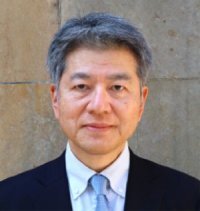
Dr. TAKAHARA Akio is Distinguished Visiting Professor at Tokyo Woman’s Christian University and Professor Emeritus of The University of Tokyo, and a Senior Adjunct Fellow at The Japan Institute of International Affairs.
The views expressed in this article are the author's and do not reflect those of JIIA CGO.