


Chapter 2: The Free Trade System at a Crossroads: Trade Strategy in the New Normal
Kensuke Yanagida (Senior Fellow, The Japan Institute of International Affairs)
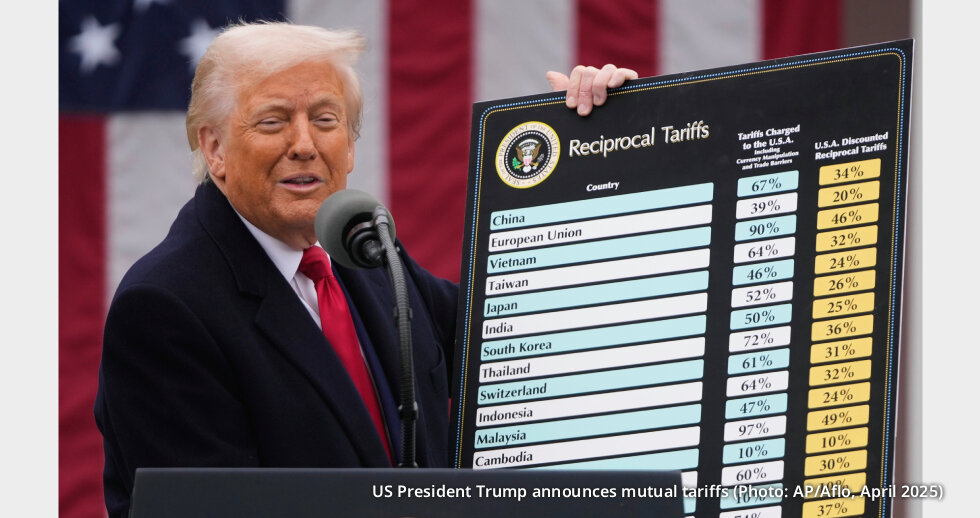

How far will the Trump administration’s tariff policies expand, and how long will they continue?
As of November 2025, the United States had reached agreements with 11 economies in bilateral negotiations on reciprocal and sectoral tariffs. The tariff rates were set at 10% for the United Kingdom, 15% for Japan, Korea, and the EU, and approximately 19% for ASEAN economies. Countries such as Canada, India, and Brazil, which failed to reach agreements, were subject to additional tariffs based on such issues as fentanyl, imports of Russian oil, and the prosecution of former President Jair Bolsonaro.
US bilateral negotiations have been deal-oriented and depart significantly from conventional trade diplomacy, often shaped by the personal judgment of President Donald Trump. Reciprocal tariffs are justified under the International Emergency Economic Powers Act (IEEPA) on national security grounds. For President Trump, who champions the “Make America Great Again” (MAGA) agenda, the revival of domestic manufacturing is a top priority. As a result, high baseline tariffs remain firmly in place.
Sectoral tariffs based on Section 232 of the Trade Expansion Act have expanded beyond steel, aluminum, and automobiles to include copper, timber and wood furniture, port handling equipment (such as cranes), and heavy trucks. The US Department of Commerce is currently investigating additional sectors, including semiconductors, pharmaceuticals, critical minerals, aircraft and parts, and robotics. The scope of sectoral tariffs is therefore expected to continue expanding.
Lawsuits against the use of IEEPA have been filed by business groups and several states within the US. The US Court of International Trade (CIT) has ruled the tariffs unlawful, and the Supreme Court has also expressed skepticism regarding the administration’s tariff authority under IEEPA. However, alternative legal bases such as Section 122 of the Trade Act and Section 338 of the Tariff Act have been suggested, making it likely that high tariffs will remain in place for the foreseeable future.
Following a US-China summit in Korea (APEC), China agreed to suspend export controls on rare earths and to strengthen measures against fentanyl outflows. In response, the United States agreed to lower the additional tariffs imposed beyond the existing 25% rate to 20% and suspend further measures for one year. The trade war that began during the first Trump administration has entered a new phase in which China has gained the capacity to impose effective countermeasures by leveraging supply chain choke points. The situation has shifted from US dominance to a more balanced strategic competition. Some observers even argue that China, prepared for a prolonged confrontation, holds an advantage. Although short-term escalation remains possible, a strategic equilibrium between the two countries is likely to persist.
What are the implications for the Japanese economy?
Because bilateral negotiations were concluded with the United States and retaliatory measures were not escalated, the IMF projects that the impact on global economic growth in 2025 will be limited to about –0.2 percentage points relative to the baseline forecast of 3.4%.
Estimates of the impact on the Japanese economy vary. According to Kawasaki (August 2025)1, Japan may benefit from trade diversion effects, given that its tariff rates are lower than those of China and ASEAN economies. In contrast, the Daiwa2 Institute of Research warns that supply chain restructuring will not occur in the short term and that expectations of windfall gains should be tempered. It also cautions that a contraction of the global economy could have negative effects.
Japan’s real GDP growth for FY2025 is projected to be around 0.6%, suggesting a limited macroeconomic impact. At the sectoral level, however, the effects are uneven. For example, exports of automobiles to the United States declined by 28.4% year-on-year in value terms in August 2025, indicating severe impacts on specific industries.
Will the nature of the free trade system change?
In August 2025, US Trade Representative Jamieson Greer contributed an op-ed to The New York Times, arguing that the existing international trade system centered on the WTO is no longer sustainable and declaring the intention to establish a new trade order (the “Turnberry system”)3. Trump’s tariffs undoubtedly violate WTO rules and undermine the most-favored-nation (MFN) principle, a core pillar of the multilateral trading system, raiseing concerns that disregard for the WTO will spread and that compliance with trade rules will weaken.
At the same time, it is also true that many of the prerequisites that supported the free trade system have changed. The United States, once the champion of free trade, has shifted toward protectionist policies. China’s industrial subsidies, overcapacity, and other market-distorting practices continue to pose serious challenges. In addition, economic security policies such as supply chain resilience for critical goods and protection of advanced technologies amid geopolitical competition have become major trends.
The free trade system is therefore at a crossroads. Nonetheless, a rules-based free trade system remains essential for many countries. As uncertainty in trade increases, recognition of its importance is growing. There are also emerging efforts to strengthen cooperation between Europe and CPTPP members, and the Philippines and the UAE have newly applied to join the CPTPP. The use of bilateral FTAs and regional frameworks such as the CPTPP among like-minded countries is expected to expand.
Recommendations
First, it is essential to endeavor to expand the CPTPP. Currently, nine economies have applied to join. Negotiations should prioritize countries capable of meeting CPTPP standards and provide a clear roadmap for accession. Japan should also strengthen cooperation with the EU and support economies such as Korea and Thailand that have expressed interest in membership. In addition, Japan should promote a bilateral EPA with Bangladesh, strengthen engagement with MERCOSUR, and work to upgrade the RCEP.
Cooperation with like-minded countries to maintain and reform the WTO also remains critical. This includes utilizing the Multi-Party Interim Appeal Arbitration Arrangement (MPIA) as an alternative to the non-functioning Appellate Body, revitalizing plurilateral negotiations such as the Joint Statement Initiative (JSI) on e-commerce, and reviewing security exceptions in line with evolving economic security trends.
In strengthening supply chain resilience for critical minerals and other strategic goods, Japan should first seek closer cooperation with the United States, and then expand collaboration with the United Kingdom, the EU, Australia, Canada, Korea, and partners in the Global South.
(December 11, 2025)
- Kenichi Kawasaki (2025) “Economic Impact of New U.S. Reciprocal Tariffs I (Policy Analysis Focus 25-8)”, National Graduate Institute for Policy Studies.
https://www.grips.ac.jp/uploads/about/2025/08/6127643611daf9bc0093810cf07e25701d293ec0.pdf - Daiwa Institute of Research https://www.dir.co.jp/report/research/economics/japan/20241218_024804.pdf
- Primarily refers to an approach using high tariffs as leverage to lower the other country’s trade barriers and attract investment through bilateral negotiations; also known as the Trump Round