


Chapter 5: Europe’s “Strategic Autonomy”: The Intersection of Long-Term and Short-Term Perspectives

Long-term momentum continues to build for regional defense cooperation and defense capability enhancement
The year 2025 began turbulently for European countries. During his visit to Europe in February, US Secretary of Defense Pete Hagseth mentioned the deadline for US troops stationed in Europe and, at the Munich Security Conference that followed, Vice President JD Vance expressed criticism of "freedom of speech" within Europe. Furthermore, Ukrainian President Volodymyr Zelenskyy's summit meeting with President Donald Trump during his visit to the White House ended in disagreement, revealing the new US administration's harsh view of Europe. The National Security Strategy (NSS) announced in December also voiced concern about the "civilizational erasure" in Europe, and European policy continues to be criticized.
Given these circumstances, Germany's newly appointed Chancellor Friedrich Merz surprised those around him by stating that Europe ultimately needs to "not depend on the United States." Furthermore, Germany proposed that France consider nuclear sharing, and French President Emmanuel Macron responded with a message echoing this sentiment. In July, France and the UK issued a joint statement on a new nuclear strategy, while Germany and the UK signed a bilateral defense policy agreement. This accelerates Europe's move toward "strategic autonomy." The decision at the late July NATO summit to target 5.0% of GDP for defense spending further demonstrates member states' recognition of the necessity for strategic autonomy, a direction that will undoubtedly persist.
Maintaining US engagement remains paramount in the short term
Despite pursuing strategic autonomy over the long term, Europe still requires US military power. The emergency meeting between President Trump and President Zelenskyy at the Vatican in April proved "the most successful to date" (according to President Zelenskyy), and US-European relations have gradually improved since spring, as indicated by President Trump's attendance at the NATO summit despite initial doubts about his participation. Tariff negotiations, which were expected to be difficult, reached a final agreement at 15%, and the feared Anti-Coercion Instrument (also known as the "trade bazooka") was not deployed.
This improvement in relations owes much to concessions from the European side. While ultimately achieving strategic autonomy would produce a Europe no longer dependent on the United States, potentially leading to a further reduction in US engagement on the European continent, greater caution is in fact required regarding the timing and extent of such a shift, with nuclear deterrence against Russia one of the issues to be addressed. Leaders repeatedly state their military capabilities are not intended to replace the US, aiming to meet US requests while keeping the US engaged on the continent. Europe's strategy may seem contradictory at first glance, but the military threat from Russia makes US involvement indispensable, so this approach is highly likely to endure.
Domestic political divisions and Europe's role in international politics
As the United States reduces its involvement in international affairs, Europe's position in international politics will inevitably change. To avoid being bypassed by US-Russia negotiations on the Ukraine war, European nations will be increasingly required to commit more deeply to such talks. Regarding the Middle East, the example of Syrian refugees remains fresh in the memory, and European countries do indeed wish to avoid further prolonged chaos. Left-wing groups and younger generations across Europe tend to be relatively anti-Israel, and leaders without strong domestic support bases, such as those in the UK and France, cannot afford to ignore these opinions. Consequently, the UK became the first G7 nation to recognize Palestine as a state, followed by France. The US has strongly criticized these actions, suggesting that US-European relations might remain in a precarious balance. However, it seems unlikely that either the UK or France possess the diplomatic and military assets needed to take on a full-fledged mediator role in the Middle East; such activities should primarily be understood through the lens of domestic politics. While 2026 will see no major national elections in key countries, France is expected to begin primaries in late 2026 ahead of its 2027 presidential election. Additionally, Germany will hold state parliament elections in five regions, including Berlin, potentially altering the composition of the Bundesrat.
Recommendations
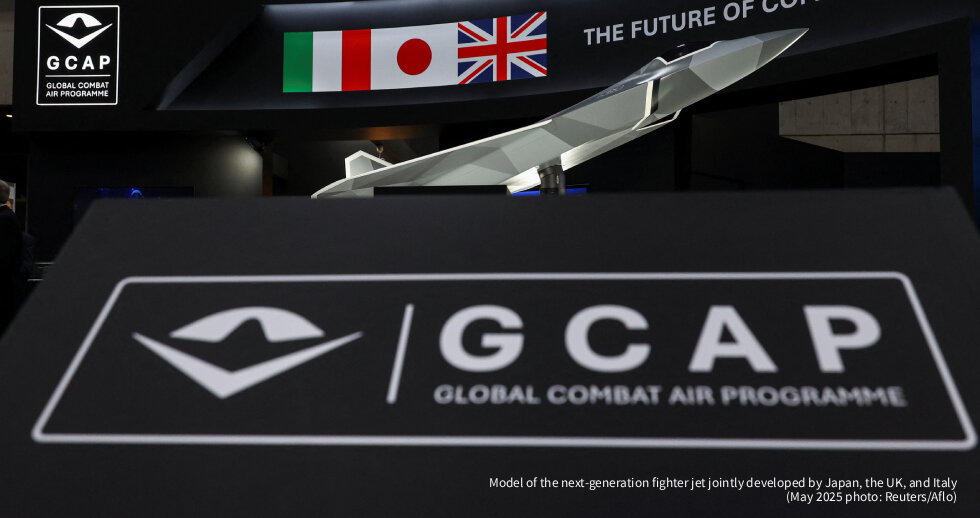
- Increased defense spending in Europe signifies market expansion, presenting a potential business opportunity for Japanese companies. To ensure the sustainability of Japan's defense industry, its competitiveness in this market must be strengthened, requiring the government to take the lead in projects such as the Global Combat Air Programme (GCAP).
- In 2025, the UK and Norway conducted a continuing series of exercises in the Indo-Pacific. Japan must further encourage European engagement in the Indo-Pacific (through joint exercises, missions to Japan, etc.) while demonstrating the contributions Japan can make in Europe and Ukraine. Participation in mine-sweeping exercises in autumn 2024 is a prime example, and additional joint exercises and technical cooperation within the European region can no doubt be promoted.
- Given the stances of both the Russian and Ukrainian governments in peace negotiations, the war in Ukraine is likely to continue. Territorial divisions and security guarantees are key to concluding a peace agreement, and building trust among the stakeholders is essential. However, the possibility of such trust-building between Russia and Ukraine is low.
- Should peace negotiations reach a settlement, Japan could contribute by assigning the Self-Defense Forces to mine clearance and mine sweeping duties, dispatching command personnel, and extending industrial cooperation on drones and other dual-use items. Infrastructure restoration and governance support could also be considered. However, the nature of the security guarantees provided could significantly influence the scope of support Japan could offer. For Japan to engage in active reconstruction support, solid military security guarantees from the United States and NATO countries would be necessary.
- Japan and Europe should further advance political, economic, and defense cooperation as partners in shaping a rules-based international order. Particularly given that the United States cannot be expected to maintain its previous level of active engagement and contribution for the foreseeable future, we should consider what cooperation we can provide as key partners in forming and maintaining an international order based on the rule of law. Moreover, by coordinating narratives and approaches, we can reduce regional biases in our outreach to the Global South.
(December 31, 2025)