


JIIA Strategic Comments (2026-22)Manufacturing Ambiguity — How Beijing Weaponizes Okinawan Identity Against the US-Japan Alliance
Stephen NAGY(CGO Fellow / Professor at International Christian University)

Executive Summary
Beijing is systematically cultivating alternative narratives about Okinawan identity. It has amplified Ryukyuan cultural distinctiveness and exploited existing complexities over the U.S. base presence—sentiments which exist in certain parts of Okinawa but are not representative of the prefecture’s population as a whole. It has asserted a privileged historical Sino-Ryukyu relationship as part of a deliberate campaign to erode the U.S.-Japan alliance and weaken Japan’s strategic and legal position in the East China Sea (ECS) and the broader region. The core mechanism of this campaign is to use disinformation to inflame divisions where divisions already exist. Initiated as a coherent operational campaign around 2012–2013, these efforts intensify during periods of Japan-China tension and are prosecuted through state media, academic institutions, social media platforms, and the United Front Work Department (UFWD) networks globally. The strongest evidence for operational impact lies not in direct persuasion of Okinawan audiences, where measurable effect is limited, but in the systematic and sustained international projection of an ambiguity around Japan’s sovereignty over Okinawa where there is none according to international law. Addressing this challenge requires Tokyo and Washington to acknowledge the campaign’s systematic character, continue constructive measures to alleviate local burdens, and develop coordinated counter-narrative capacity.
Introduction
In the competitive strategic environment of the Indo-Pacific, the contest for narrative dominance has become an increasingly consequential dimension of great power competition alongside military capability and economic coercion. Beijing has invested heavily in what Walker and Ludwig (2017) termed “sharp power”. These are influence tools designed not merely to attract but to penetrate and manipulate the domestic political environments of target states through information distortion (disinformation). Japan, and Okinawa in particular, constitutes one of the most geographically significant theaters for this approach.
Okinawa hosts approximately 70% of US military facilities in Japan while comprising less than 1% of the country’s total land area (Chanlett-Avery & Rinehart, 2016). Grievances arising from the delayed reversion of Okinawa and the subsequent concentration of U.S. military bases are real, and they are precisely what Beijing has assiduously sought to exploit. The Japanese government has taken a range of measures in response to alleviate this burden, but the historical tension between national security imperatives and local representation remains a target for amplification (Smith, 2015). This brief examines the strategic rationale, institutional architecture, operational mechanisms, and the limits of the evidence for direct operational impact, before drawing policy-relevant conclusions.
Theoretical Framework
Three frameworks help us elucidate Beijing’s approach. First, Walker and Ludwig’s (2017) sharp power concept, distinguishing coercive information ecosystem manipulation from benign soft power projection, captures the deceptive character of the campaign under analysis. Second, constructivist international relations theory (Wendt, 1999; Anderson, 1991) supplies the identity-politics foundation: national and sub-national identities are socially constructed and therefore malleable through sustained narrative intervention. The Ryukyuan case is particularly susceptible precisely because Okinawan political history is layered and complex. Third, the gray zone operations literature (Mazarr, 2015) situates Beijing’s approach within a systematic effort to achieve strategic objectives below the threshold of military conflict, positioning information operations as one integrated element of a multi-domain toolkit alongside economic coercion and maritime gray zone activity.
Historical Foundations
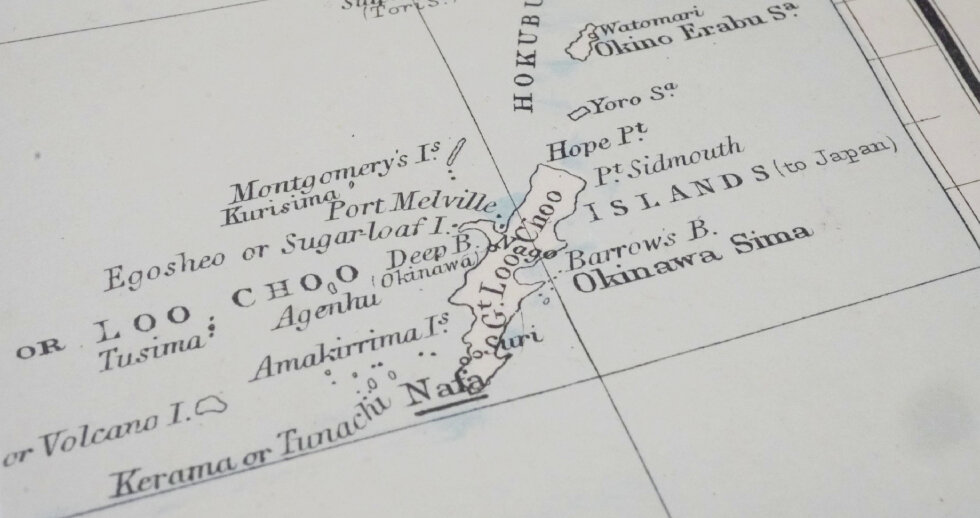
The Ryukyu Kingdom (1429–1879) maintained simultaneous tributary relationships with Ming and Qing Dynasties and with Japan’s Satsuma domain. This dual-subordination structure reflected pragmatic diplomacy rather than singular civilizational allegiance (McCormack & Norimatsu, 2012). Japan’s formal incorporation of the Ryukyus as Okinawa Prefecture in 1879, the 琉球処分/ Ryūkyū Shobun/ Ryukyu Annexation, extinguished the kingdom’s independent status. Scholars including Matsushima Yasukatsu of Ryukoku University and the late Arasaki Moriteru represent a body of genuine indigenous Okinawan political thought characterizing this annexation as colonial dispossession and arguing for Ryukyuan self-determination on postcolonial grounds (松島泰勝, 2012; 新崎盛暉, 2005). This scholarship is analytically distinct from and historically antecedent to Beijing’s strategic exploitation of similar arguments, and it warrants serious engagement on its own terms rather than treatment primarily as a target for Chinese amplification. Okinawan political consciousness is further shaped by the catastrophic 1945 Battle of Okinawa and the delayed reversion due to US administration of the prefecture through 1972, experiences generating durable and entirely independent bases for political grievance (Eldridge, 2001).
The decisive Chinese escalation came in May 2013, when Zhang Haipeng and Li Guoqiang of the Chinese Academy of Social Sciences published in People’s Daily arguing that Ryukyuan sovereignty status remained legally “unresolved”, an article published at the height of the Senkaku/Diaoyu nationalization crisis in timing unmistakably strategic in character (张海鹏、李国强, 2013; Dreyer, 2016; 産経新聞, 2013).
Strategic Rationale
Beijing’s cultivation of alternative Okinawan identity narratives serves three interlocking objectives. The primary goal is structural weakening of the U.S.-Japan alliance at its most geographically exposed node by exploiting existing domestic complexities surrounding the base presence. Second, the Ryukyu sovereignty narrative functions as a rhetorical and legal lever in the Beijing-manufactured Senkaku dispute: if Japan’s sovereignty over Okinawa is cast as historically contested by China, the legal basis for Japanese sovereignty over the Senkakus administered as part of Okinawa Prefecture becomes correspondingly more precarious in international opinion (廉德瑰, 2016; 曲升, 2017).
Japan's sovereignty over Okinawa is a thoroughly settled matter of international law. Under the 1951 San Francisco Peace Treaty, Japan did not renounce the Ryukyu Islands, which are absent from the territories listed in Article 2; Article 3 instead gave the United States powers of administration over the islands, while sovereignty remained with Japan throughout. Administrative authority over the islands was fully and formally returned to Japan through the 1971 Okinawa Reversion Agreement." Furthermore, regarding the Senkaku Islands, Japan maintains the firm and legally sound position that no territorial dispute exists. It is a matter of historical record that even Chinese historical maps utilized the Japanese names for the islands, and Beijing only began asserting a claim after the 1968 UN ECAFE survey report highlighted potential undersea resources in the area.
Third, a politically destabilized Okinawa disrupts Japan’s First Island Chain defense architecture, central to deterrence of Chinese maritime expansion and any Taiwan contingency (Heginbotham et al., 2015).
Actors and Mechanisms
China’s Okinawa narrative operations deploy through layered state, quasi-state, and nominally civil actors. The United Front Work Department (UFWD), significantly expanded under Xi Jinping after 2015, cultivates relationships with Okinawan civic, cultural, and academic organizations (Brady, 2017; 読売新聞特別取材班, 2021). Chinese state media including Global Times, People’s Daily, and Xinhua regularly frame Ryukyuan identity as distinct from Japanese national identity (张海鹏、李国强, 2013; 环球时报社评, 2013). CASS’s Institute of Modern History, its Japan Research Center, and Wuhan University’s Research Center for China’s Boundary and Ocean Studies provide academic scaffolding, publishing in peer-reviewed venues including 当代亚太 and 日本学刊 (胡德坤, 2017; 吴怀中, 2020; 廉德瑰, 2016). The hashtag 琉球独立 periodically trends on Weibo during Japan-China tensions in patterns characteristic of coordinated rather than organic promotion (环球时报, 2016). Operations show documented intensification at identifiable trigger events: the 2012–2013 Senkaku crisis, the 2021 ADIZ escalation, and annual Battle of Okinawa commemorations.
The most operationally sophisticated mechanism is selective amplification of authentic Okinawan voices. Scholars arguing for Ryukyuan self-determination find their work amplified in Chinese state media without disclosure of the foreign state interest behind that amplification. We also see their presentations in China proper represented as widely shared Japanese or Okinawa sentiment as opposed to a small minority. These launder Chinese strategic interests through credible indigenous authorship and rendering counter-messaging significantly more complex.
Assessing Effectiveness: Evidence and Limits
A credible analysis requires direct engagement with skeptical perspectives on Chinese information operation effectiveness. Critics argue that Beijing’s Okinawa narratives are consumed primarily by domestic Chinese audiences rather than genuinely moving Okinawan political opinion; that media volume translates poorly into measurable political behavior change in target populations; and that heavy-handed Chinese state media messaging can generate nationalist backlash rather than persuasion (Weiss, 2014; Liff, 2019). These are substantive objections. Ryukyu Shimpo and Okinawa Times polling consistently demonstrates that Okinawan opposition to US bases is overwhelmingly rooted in local political experience—including noise, accidents, and land dispossession—rather than in receptivity to Chinese historical revisionism (琉球新報, 2022; 沖縄タイムス, 2021).
The evidential case for direct, measurable impact of Chinese narrative operations on Okinawan political opinion is therefore weaker than structural inference approaches common in the security literature tend to suggest. What is well-evidenced is not that Beijing is meaningfully moving minds within Okinawa, but that it is producing a systematic, strategic and sustained international information environment in which Japan’s sovereignty over Okinawa appears contested, a second-order effect operating through international audience dynamics rather than domestic Okinawan politics. This distinction has direct implications for policy: counter-messaging targeted at Okinawan domestic audiences misidentifies the operational problem, whereas transparency infrastructure, international legal communication, and constructive burden-sharing measures correctly address the actual vulnerabilities being exploited.
Why It Remains a Strategic Problem
Even granting these limitations, the campaign presents a multi-dimensional challenge. It deepens genuine domestic cleavages without requiring direct persuasion, compounding their political cost for Tokyo regardless of measurable opinion effects. It corrupts public discourse by making it genuinely difficult to distinguish authentic democratic expression from amplified foreign political pressure, an ambiguity that is operationally valuable to Beijing in itself (Brady, 2017; Liff, 2019). The operational template tested in Okinawa is being concurrently replicated across the Indo-Pacific, in Taiwan’s domestic political discourse, in South Korean debates about USFK, and among ASEAN states navigating South China Sea claims which confirms a deliberate and transferable strategic methodology rather than opportunistic exploitation of local conditions (Walker & Ludwig, 2017).
Policy Recommendations
Effective countermeasures must be calibrated to where evidence actually points. As the region grows more geopolitically important, this gray-zone activity warrants closer attention rather than less. Tokyo should continue its ongoing measures to alleviate the base-hosting burden and foster constructive dialogue with Okinawa to mitigate the vulnerabilities Beijing exploits. Washington and Tokyo should invest in transparency infrastructure, public attribution of UFWD-linked networks and systematic open-source monitoring of Chinese-language narrative operations rather than domestic counter-messaging campaigns that risk conflating Chinese influence operations with authentic Okinawan political expression. Internationally, Japan should invest in sustained legal communication reinforcing the settled status of Okinawan sovereignty under the 1951 San Francisco Peace Treaty and the 1971 Okinawa Reversion Agreement, targeting international rather than domestic audiences where the principal information effect operates. Quad and Five Eyes coordination on common counter-influence protocols should establish the Okinawa template as a shared baseline for understanding China’s broader regional information operations (Liff, 2019).
Conclusion
Beijing’s cultivation of alternative Okinawan identity narratives is a deliberate, multi-actor, strategically calibrated information operation. Its demonstrable impact lies less in shifting Okinawan domestic opinion—where the evidence is limited and where indigenous grievances have deep independent roots—than in sustaining international uncertainty about Japan’s sovereignty over Okinawa.
Crucially, the operation’s effectiveness depends fundamentally on the ongoing complexities Japan faces in balancing the domestic interests of the Okinawan people with maintaining a robust, resilient, and deepening Japan-U.S. alliance. To reduce the structural vulnerabilities that can render the prefecture exploitable, Tokyo will need to continue fostering closer cooperation with the people of Okinawa and highlighting the government's ongoing measures to support the prefecture. Addressing this challenge requires recognizing that resolving these internal domestic dynamics constructively is inseparable from building genuine strategic resilience in the East China Sea.
References
Chinese Language Sources
- 张海鹏, 李国强. (2013年5月8日). 论《马关条约》与钓鱼岛问题. 人民日报. http://theory.people.com.cn/n/2013/0508/c40531-21399831-3.html.
- 环球时报社评. (2013年5月9日). 解决琉球问题,掌握对日博弈更多主动. 环球时报. https://www.xinhuanet.com/world/2013-05/11/c_124696351.htm.
- 吴怀中. (2020年6月30日). 日本战略调整释放令人担忧信息. 中国南海研究院. https://www.nanhai.org.cn/search-detail/9571/1.html.
- 廉德瑰. (2016). 日本对外战略与日中关系格局. “日本学刊”, (2), 14–33.
- 胡德坤. (2017). "旧金山和约"与东亚领土争端. 边界与海洋研究, (1). https://www.sohu.com/a/130150081_618422.
- 曲升. (2017). 近代以来琉球问题的历史演变与国际法维度. 当代亚太, (4), 55–78.
- 张蕴岭. (2015). 在理想与现实之间:我对东亚合作的研究、参与和思考. 中国社会科学出版社. http://www.xinhuanet.com/politics/2015-08/31/c_128185628.htm.
- 环球时报. (2016年8月14日). 琉球群岛地位未定,不能叫"日本冲绳". 环球时报. https://www.thepaper.cn/newsDetail_forward_1513519.
Japanese Language Sources
- 新崎盛暉. (2005). 沖縄現代史. 岩波書店. (岩波新書).
https://www.iwanami.co.jp/book/b268805.html. - 松島泰勝. (2012). 琉球独立への道:植民地主義に抗う琉球ナショナリズム. 法律文化社. https://www.hou-bun.com/cgi-bin/search/detail.cgi?c=ISBN978-4-589-03394-9.
- 産経新聞. (2013年5月9日). 中国、琉球に領有権示唆 人民日報が論文掲載. 産経新聞. https://www.sankei.com/article/20130510-6IXSF2QS25LRVKTYVBBDRUFZFI/.
- 沖縄県選挙管理委員会. (2019, March 1). 辺野古米軍基地建設のための埋立ての賛否を問う県民投票開票結果 [Results of the prefectural referendum on land reclamation for U.S. military base construction at Henoko]. 沖縄県.
(https://www.pref.okinawa.lg.jp/kenkouhou/H31/3gatsu/190301gogai6.pdf.) - 沖縄タイムス. (2022年3月30日). 基地を巡る県民意識に変化?県が重点的に取り組むべき施策. 沖縄タイムス. https://www.okinawatimes.co.jp/articles/-/933655.
- 琉球新報・毎日新聞. (2022年5月10日). 米軍基地集中、沖縄6割「不平等」. 琉球新報. https://mainichi.jp/articles/20220509/k00/00m/010/138000c.
English Language Sources
- Anderson, B. (1991). Imagined communities: Reflections on the origin and spread of nationalism (Rev. ed.). Verso.
- Brady, A. M. (2017). “Magic weapons: China's political influence activities under Xi Jinping. Wilson Center. https://www.wilsoncenter.org/article/magic-weapons-chinas-political-influence-activities-under-xi-jinping.
- Chanlett-Avery, E., & Rinehart, I. E. (2016, January 20). The U.S. military presence in Okinawa and the Futenma base controversy (CRS Report No. R42645). Congressional Research Service. https://sgp.fas.org/crs/row/R42645.pdf.
- Dreyer, J. T. (2016). Middle Kingdom and Empire of the Rising Sun: Sino-Japanese relations, past and present. Oxford University Press. https://global.oup.com/academic/product/middle-kingdom-and-empire-.
- Eldridge, R. D. (2001). The origins of the bilateral Okinawa problem: Okinawa in postwar U.S.–Japan relations, 1945–1952. Routledge.
- Heginbotham, E., Nixon, M., Morgan, F. E., Heim, J. L., Hagen, J., Li, S., Engstrom, J., Libicki, M. C., DeLuca, P., Shlapak, D. A., Frelinger, D. R., Laird, B., Brady, K., & Morris, L. J. (2015). The U.S.-China military scorecard: Forces, geography, and the evolving balance of power, 1996–2017 (Report No. RR-392-AF). RAND Corporation. https://www.rand.org/pubs/research_reports/RR392.html.
- Liff, A. P. (2019). Unambivalent alignment: Japan’s China strategy, the U.S. alliance, and the “hedging” fallacy. International Relations of the Asia-Pacific, 19(3), 453–491. https://doi.org/10.1093/irap/lcz015.
- Mazarr, M. J. (2015). Mastering the gray zone: Understanding a changing era of conflict. Strategic Studies Institute and U.S. Army War College Press. https://press.armywarcollege.edu/monographs/428/.
- McCormack, G., & Norimatsu, S. O. (2018). Resistant islands: Okinawa confronts Japan and the United States (2nd ed.). Rowman & Littlefield.
- Smith, S. A. (2015). “Intimate rivals: Japanese domestic politics and a rising China”. Columbia University Press. https://cup.columbia.edu/book/intimate-rivals/9780231167888.
- Walker, C., & Ludwig, J. (2017). From “soft power” to “sharp power”: Rising authoritarian influence in the democratic world. in Sharp power: Rising authoritarian influence (pp. 8–25). National Endowment for Democracy. https://www.ned.org/sharp-power-rising-authoritarian-influence/.
- Weiss, J. C. (2014). Powerful patriots: Nationalist protest in China’s foreign relations. Oxford University Press.
- Wendt, A. (1999). Social theory of international politics. Cambridge University Press.