


JIIA Strategic Comments (2026-24) France’s Forward Deterrence Ahead of the 2027 Election: A Commitment Without Guarantee?
Timothée Albessard(Research Fellow, The Japan Institute of International Affairs)

Papers in the "JIIA Strategic Commentary Series" are prepared mainly by JIIA research fellows to provide comments and policy-oriented analyses of significant international affairs issues in a readily comprehensible and timely manner.
On March 2, 2026, French President Macron delivered a speech at the Île Longue nuclear submarine base, in which he introduced the concept of forward deterrence, while announcing that France would increase the number of its nuclear warheads and no longer disclose the size of its arsenal1. As a novel nuclear deterrence initiative distinct from NATO, forward deterrence represents a significant development in the European security landscape. This paper takes stock of the initiative ahead of the April 2027 French presidential election, whose outcome might test its durability, by assessing its singular features and highlighting its current limits, challenges, and opportunities.
Between Two Shocks: The Drivers of Forward Deterrence
Forward deterrence builds on France’s long-standing position that its vital interests have a European dimension extending beyond its national borders. Decades of European integration have generated both de facto and de jure solidarity within NATO and the European Union (EU), from which France directly benefits. Preserving this web of overlapping interests and interdependence has also given Paris incentives to act not only as a recipient, but also as a security provider (even during the period of its withdrawal from NATO’s integrated command structure, as shown by the 1967 Ailleret-Lemnitzer agreement2 and the 1974 Ottawa Declaration3 ), exemplified today by French contributions to NATO’s Eastern flank and to various EU missions4.
The evolution of French nuclear doctrine towards forward deterrence responds to both exogenous and endogenous factors. Exogenously, the European security order has been facing two simultaneous shocks. The first is an ongoing, multifaceted Russian threat, at each level of the conflict spectrum: political warfare, infiltration, and sabotage operations5; deniable kinetic tests of European reactions, such as drone incursions both in airspace and on European soil6; the threat of a limited military provocation to test alliance solidarity7; and the possibility of a broader conflict involving strategic-level-effect conventional strikes under the nuclear shadow.
The second shock comes from within the alliance, with the changing nature of U.S. behaviour: weakening its own rhetorical commitment to the alliance;8 threats to allied territorial integrity;9 a slow drift towards a vertical model of intra-alliance coercion based on loyalty pledges and unilateral U.S. interests;10 unprecedented accommodation of Russia;11 and growing U.S. temptation to adopt a conventional-nuclear division of deterrence labour by reducing its conventional contribution to NATO, which would open critical deterrence gaps by disconnecting the two elements that jointly give credibility to the possibility of U.S. nuclear use on behalf of the alliance.12 Taken together, these two shocks reveal gaps in both strategy and capabilities that Europeans must strive to fill, and to which forward deterrence partially seeks to contribute.
The endogenous factor concerns the durability of the French nuclear doctrine as well as France’s broader contribution to European security in this changing context. On doctrine, forward deterrence operationalises the long-standing notion of the European dimension of French vital interests, following the 2020 offer of dialogue on this matter, which drew little response from allies: it was made just weeks before the COVID-19 pandemic struck Europe, and allies such as Germany were wary that it might be seen as undermining NATO.13 Yet amid a deteriorating European security order, leaving this notion abstract would weaken both the deterrence of Russia and the credibility of France’s commitment to the security of the continent. As for France’s broader contribution, most European allies are increasing their defence spending and their participation in collective defence, but for both budgetary and strategic reasons, France has neither the capacity nor the will to undertake a conventional buildup comparable to Germany’s or Poland’s. Forward deterrence therefore represents the most distinctive contribution France can make, enabling it to leverage its existing asymmetric strengths.
A New Form of Nuclear Deterrence Cooperation
Forward deterrence can be primarily defined by its operational and political components. From an operational standpoint, it relies on the possibility of holding joint exercises between French strategic forces and allied conventional forces, designed to improve what can be compared to NATO’s conventional support to nuclear operations (CSNO). The first such activity in this context took place in July and involved nuclear-capable Rafales and German aircraft, with air-to-air refuelling and interoperability manoeuvres.14
This operational component also includes the possibility of temporarily deploying French strategic air forces to allied territory. The goal is to enhance the survivability of France’s nuclear-capable aircraft to a larger set of locations, thereby increasing their strategic depth. It would potentially bring French forces closer to Russian territory and raise the costs of a Russian first strike, by forcing Moscow to target several countries at once.
The political dimension of forward deterrence is embodied by the bilateral nuclear steering groups, which have so far been convened with Belgium, Finland, Germany, the Netherlands, Poland, Sweden, and the United Kingdom – whose group was established by the 2025 Northwood Declaration and predates the initiative (see Table 1 below). Their purpose is to gradually institutionalise formal talks on European security and on how France’s nuclear forces, in tandem with allied conventional capabilities, can bolster it, while deepening the political and military exchanges required to ensure a shared threat perception. The bilateral nature of these groups is essential to avoid any impression that France is competing with NATO’s Nuclear Planning Group (NPG), of which it is not a member. It also works as a hub-and-spoke design that preserves French autonomy by keeping each partnership separate, although the possibility of participating in broader regional formats – for instance with the Nordic countries – is not excluded in the future.15
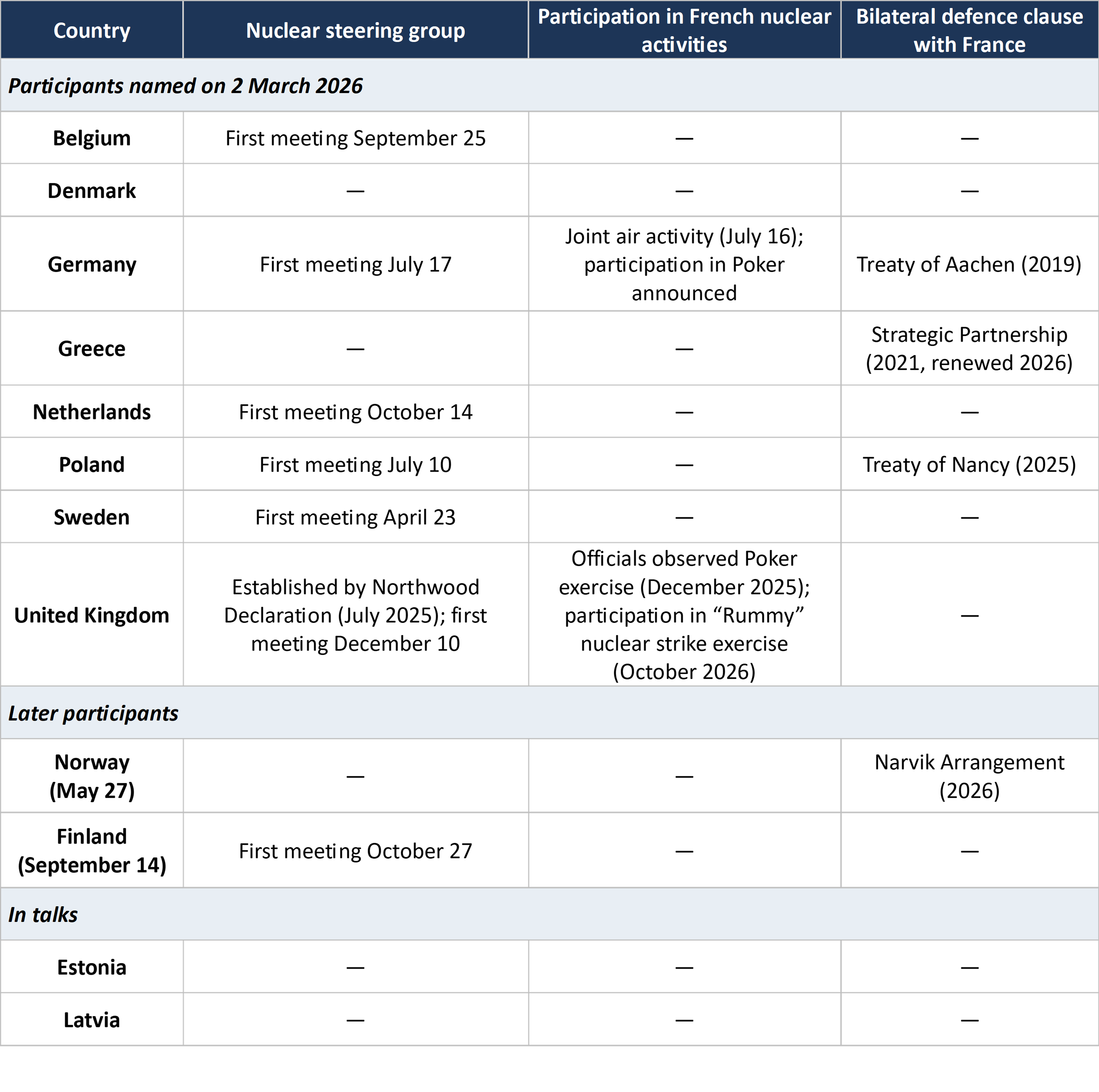
Table 1: Participation in forward deterrence, as of November 4, 2026
Finally, forward deterrence should not be misread as extended nuclear deterrence as traditionally understood based on the U.S. model. U.S. extended deterrence rests on explicit guarantees and, in NATO’s case, on the forward deployment of nuclear weapons in peacetime. President Macron clearly excluded both in his speech while reaffirming the tenets of French autonomy: sole decision-making authority on nuclear use, no joint planning, and no joint definition of what constitutes a vital interest. Forward deterrence therefore represents a new form of deterrence cooperation, centred on French autonomy and designed to complement NATO.
A Provisional Typology of Participants
The map below summarises the current state of participation. The following typology, which remains provisional (as of November 4, 2026), can be elaborated on this basis. The categories rest on different criteria (capabilities, exposure to Russia, geographic access…) and may therefore overlap.
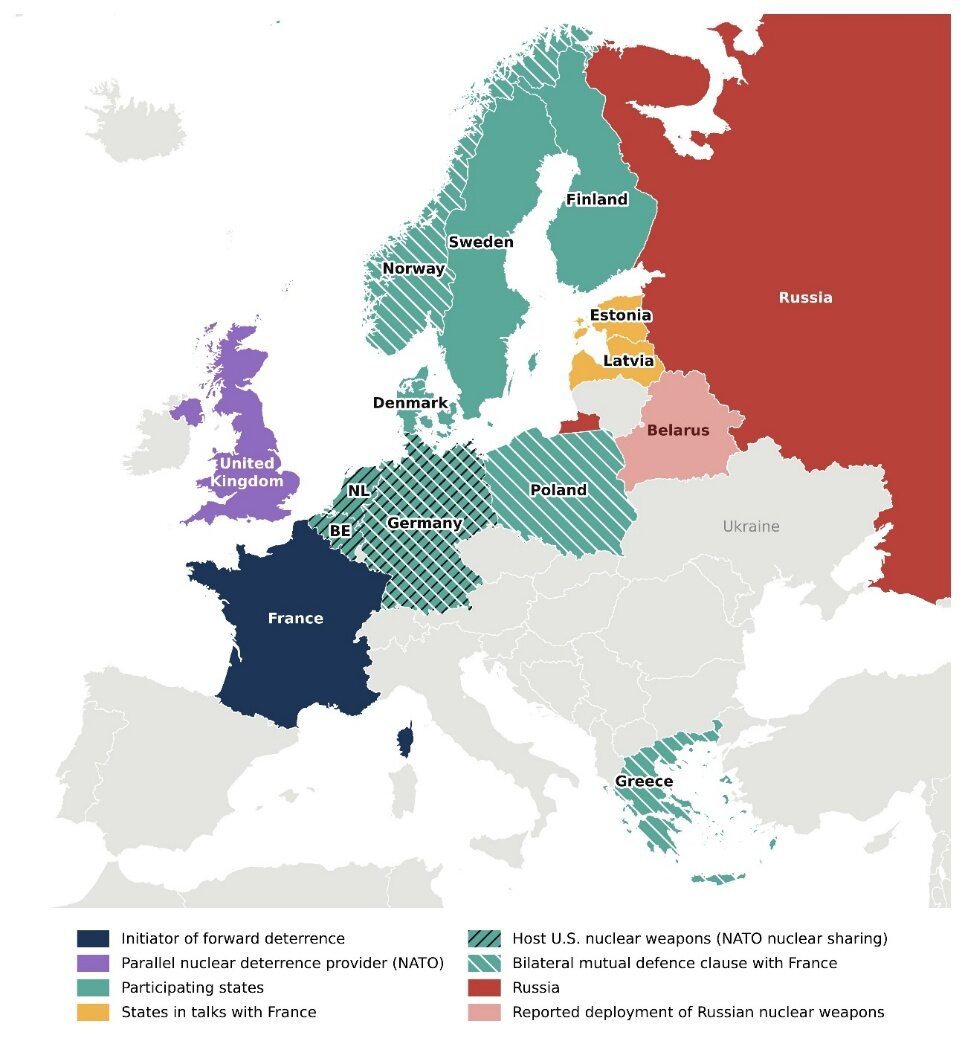
Figure 1: The geography of forward deterrence, as of November 4, 2026
Source: Author’s compilation. Map produced by the author with the assistance of Claude Opus 5.5 (Anthropic), using Natural Earth public-domain base data.
First, the United Kingdom stands in a separate category, given its status as a nuclear peer and parallel deterrence provider. London indeed participates in NATO’s nuclear planning, has assigned its nuclear forces to NATO, and announced in June 2025 that it would purchase “at least” 12 nuclear-capable F-35A fighter jets and “commit these to NATO’s nuclear mission.”16 Its support for forward deterrence builds on longstanding bilateral nuclear cooperation with France.17 London’s involvement seeks to strengthen deterrence based on the premise that multiple centres of nuclear decision-making complicate Russian calculations. In October, Royal Air Force aircraft took part for the first time in a French nuclear air exercise, which simulated a nuclear strike mission over the Mediterranean.18 This exercise represents a milestone in the operationalisation of the Northwood Declaration. Moreover, from a political perspective, cooperation with the United Kingdom is likely to provide reassurance to allies that have been historically cautious about France’s relationship with NATO that the initiative remains complementary to the alliance’s deterrence.
A second category concerns the allies that operate dual-capable aircraft (DCA) assigned to NATO’s nuclear mission, including Belgium, Germany, and the Netherlands, all three of which also host U.S. nuclear weapons. Greece could also be included in that category to a lesser extent: although it no longer hosts U.S. nuclear weapons, it was assessed in 2023 as still contributing DCA to NATO’s nuclear mission “in a reserve and contingency role.”19 These countries therefore bring solid experience related to conventional support and the operation of nuclear-capable air forces, although their delivery systems differ significantly from France’s.20 Moreover, their participation further supports France’s claim of complementarity with NATO, and Germany’s involvement from the outset, both as one of France’s closest allies and as a leading NATO and EU member on track to become one of Europe’s main conventional military powers, further legitimises the framework – although the two other states involved in nuclear sharing, Italy and Turkey, remain conspicuously absent.
A third category concerns frontline states. Poland shares a border with Ukraine, as well as with Kaliningrad and Belarus – where Russia allegedly deployed nuclear weapons21 – and Finland shares a border with Russia. For these countries, participation in forward deterrence provides an additional layer of security to rapidly evolving deterrence postures and nuclear-weapons-related policies, as evidenced by Poland’s acknowledgment that it was exploring a larger role in NATO’s nuclear deterrence22 and by Finland’s abrogation of a longstanding ban on the stationing and movement of nuclear weapons on its territory.23 Estonia and Latvia, which have both opened talks with France24 , would also be included in this category if they were to join the initiative, as they are at the heart of concerns about a potential Russian test of alliance solidarity in the coming years. By contrast, Lithuania has so far received the initiative with greater caution, warning that talks with Paris should not divide NATO,25 and preferring to seek a larger role within the alliance’s nuclear deterrence.26
A fourth category is defined by geographic access, adding northern depth to potential strike missions. Denmark, Norway, Finland, and Sweden represent the group with the greatest internal coherence. Their inclusion facilitates French access to NATO’s northern flank and the Arctic, potentially shortening transit times and opening new routing options.27 The participation of Finland, Norway, and Sweden represents a turning point in their respective nuclear policies, which had traditionally emphasised nuclear disarmament and arms control in addition to security considerations28 – a turn that the Norwegian government itself characterised as a “hedging” strategy.29
A final, cross-cutting category comprises the states that have signed a bilateral mutual defence clause with France, in addition to NATO Article 5 and – for EU members – Article 42.7 TEU: Germany (Treaty of Aachen, 2019), Greece (Strategic Partnership, 2021, enhanced in 2026), Norway (Narvik Arrangement, 2026), and Poland (Treaty of Nancy, 2025). While none of these frameworks contain explicit nuclear guarantees, they nevertheless reinforce the credibility of France’s commitment in a crisis. Greece’s case is peculiar, however, as Athens framed the ratification of the 2021 agreement in the context of tensions in the eastern Mediterranean – an implicit yet unmistakable allusion to Turkey.30 Greece’s participation therefore makes forward deterrence overlap with a dispute between two NATO allies, an overlap that Ankara could invoke to denounce the initiative as divisive and detrimental to the alliance.
This basic and provisional typology suggests that forward deterrence serves distinct yet complementary purposes. For France, it deepens existing defence partnerships, extends the strategic depth and survivability of its nuclear forces, and develops a Europe-centred deterrence initiative complementing NATO at times of heightened uncertainty regarding the U.S. commitment. For participating states, forward deterrence enables the diversification of defence and deterrence arrangements in parallel with the reinforcement of NATO, while offering the opportunity to hold direct discussions on French strategic and nuclear thinking, as Europeans are searching for new ways of enhancing their security.
The Current Limits and Challenges of Forward Deterrence
Forward deterrence nevertheless faces structural limits and challenges, whose resolution will determine its long-term viability. They can be understood as gaps between commitment and guarantee, working at three levels: French domestic politics, operations with allies, and the overall framework itself.
First, at the domestic level, there are no guarantees that this initiative will be sustained beyond the current Macron presidency. France’s political calendar raises decisive questions about the durability – and therefore credibility – of the initiative. The April 2027 presidential election’s current two frontrunners, Marine Le Pen and Jean-Luc Mélenchon, have both expressed reserved judgement regarding forward deterrence.31 Their own record is a major source of uncertainty, as they both have long been hostile to European defence cooperation, to NATO itself, and to increased support to Ukraine, while sharing a history of leniency towards Russia, of receptiveness to its narratives and, in Le Pen’s case, of documented financial ties to it.32
Because nuclear policy is a presidential prerogative (domaine réservé), either could reverse or, at the very least, hollow out the initiative; and even if they were to formally maintain forward deterrence, the credibility of France’s commitment to European security would be dramatically weakened given their longstanding foreign policy stances. The relatively fast pace at which Paris has sought to institutionalise forward deterrence before the election may be explained as a means of hedging against this uncertainty, although this institutionalisation can come at a cost, as upholding numerous bilateral dialogues simultaneously may strain its bureaucratic and human resources.
Second, at the operational level, the absence of guarantees runs in both directions in terms of efficiency, as France excludes joint nuclear planning with its allies, and its allies have not committed to supporting French nuclear forces during a crisis. Although France retains autonomy over nuclear planning, it must find a way to articulate it with allied conventional support to nuclear operations, particularly for the ultime avertissement – the possibility of a unique and non-renewable nuclear warning strike delivered by its strategic air forces. This central component of French nuclear doctrine would be the point where allied conventional support and the dispersal of French assets in host nations would matter the most.
The need for such coordination is reinforced by the fact that non-nuclear allies are increasingly developing long-range conventional strike capabilities in a fragmented manner. Since these capabilities can affect strategic stability33 , collective military and political reflection on the articulation of these capabilities, conventional support, and nuclear forces is required to develop a common understanding of escalation, a priority for both deterrence and risk reduction. France’s growing emphasis on the link between conventional capabilities and nuclear deterrence should facilitate these efforts.
The temporary dispersal on which the initiative partly relies illustrates the other side of this broader issue and currently has two main limits. It depends on the host’s consent at the moment of greatest risk, giving host states a de facto veto over French deployments. Moreover, dispersal of aircraft to bases closer to Russia during a crisis could itself be read by Moscow as escalatory, making host states priority targets.34 The Kremlin could exploit this risk in disinformation campaigns aimed at diminishing support for hosting French aircraft.
Third, and most fundamentally, the forward deterrence framework itself offers no formal guarantees to the allies potentially taking new risks by joining it. Allies that agree to host French nuclear-capable aircraft or to support their strike mission will inevitably be more exposed to Russia. Consequently, although forward deterrence is not extended deterrence, cooperation of this kind requires commitment on the part of France. A comparison with the United States can help clarify this point. Since the United States is not a European power, U.S. extended deterrence must manage an asymmetry of stakes entrenched in geography: Russia could contemplate limited nuclear use in Europe while leaving the U.S. territory untouched. Explicit guarantees to allies, forward-deployed nuclear weapons, troops and assets on European soil, and a strategy of damage limitation can be understood as means of making the U.S. commitment credible and avoiding decoupling.
By contrast, France faces a smaller asymmetry, as a European power in a situation of fundamental interdependence with its continental allies and partners. Because its interests are geographically, politically, and economically anchored in Europe, any major aggression on the continent beyond the invasion of Ukraine would, from the French perspective, risk directly affecting its vital interests, and the importance of the stakes would likely be “much more evident from the start.”35 This is the central assumption at the foundation of forward deterrence, which distinguishes France’s position from that of the United States. It is expected to be a source of credibility for France’s stated intentions, even though its nuclear arsenal is far smaller and less diverse than that of the United States.
Although this argument highlights the fundamental stakes that guide France’s initiative, it cannot, by itself, escape the Gaullist logic at the heart of France’s posture and of its historical reservations regarding extended deterrence, according to which no state can credibly be expected to risk its own survival on behalf of another. The question is therefore how far France’s vital interests can be believed to extend. While it can indeed be argued that the stakes of a Russian attack on Helsinki would be greater for France than for the United States, the same reasoning can always be applied further: considering that the stakes of an attack on Helsinki will always be lower for France than those of an attack on Paris, then the difference between French and U.S. stakes is one of degree rather than kind, and may therefore always raise the same doubts as those surrounding Washington’s commitment.
If this problem were truly insurmountable, no alliance could function properly. Mutual defence clauses, public guarantees, joint exercises, sustained political and military dialogue, all these instruments common to traditional alliance structures are precisely meant to mitigate this inherent uncertainty. However, the forward deterrence framework currently offers no formal guarantees – bilateral mutual defence clauses bind France to only four of the allies involved in the initiative – and excludes joint planning and peacetime deployment, while its declaratory commitment remains ambiguous as France leaves its vital interests deliberately undefined. The fact that their European dimension extends beyond the states currently involved in the initiative36 further obscures who is truly covered.
Most of these absences are deliberate and aim to avoid competition and duplication with NATO while increasing uncertainty for Russia, by rejecting rigid guarantees that might indicate clear thresholds, consistent with the principle of ambiguity at the foundation of French deterrence. Moreover, while the absence of mechanisms that tie France’s hands might make it difficult to reassure allies, it may also give more weight to signals in times of crisis, such as the sudden deployment of French nuclear-capable aircraft.
The fact that, as of November 4, 2026, 10 countries have joined the initiative (2 of them since Macron’s speech), with 2 more currently in discussions, shows that the lack of such mechanisms has not so far prevented participation; and the absence of public guarantees says nothing about the content of confidential bilateral discussions, which may mitigate this ambiguity in private. However, since joining entails few costs, the initiative’s current reception says little about whether allies would regard France’s commitment as sufficient in times of crisis, and the absence of states such as Italy, Lithuania, Spain, or Turkey – as well as Denmark’s limited activity thus far – is also telling.
The absence of formal guarantees may therefore raise credibility and commitment issues over time, particularly if U.S. guarantees continue to be questioned and downgraded. One of the key challenges for France will be to develop, in Schelling’s words, a French “art of commitment”, whose credibility must rest on the fact that commitment is “inescapable” for the state that extends it.37
Conclusion
Eight months after its inception, forward deterrence has already generated a dynamic network of bilateral partnerships, whose long-term viability remains to be ensured. Four main conclusions follow from this assessment.
First, forward deterrence depends on demand as much as supply. The more positive reception of France’s offer in 2026 than in 2020 partly reflects the considerable change in its allies’ motivations and policies over six years, which will shape the future of the initiative as much as French interests do. Mapping their expectations precisely will be necessary to determine the priorities and the complementarity of each partnership, clarify the costs and benefits for each state, and enable broader planning of conventional contributions and operations – on which the initiative’s credibility largely rests – at a cross-partnership, multilateral level, which the current bilateral formats do not provide.
Second, the fact that France does not engage in extended deterrence does not remove the need to bolster commitment. Allies joining the initiative accept additional risks without explicit public guarantees. While this has not discouraged them from joining so far, it may be harder to sustain over time, all the more as political continuity in Paris is highly uncertain. The development of a French “art of commitment” suited to forward deterrence is the central challenge for the years to come.
Third, forward deterrence may hold lessons for Japan, although the European and Indo-Pacific contexts remain very different. European allies under U.S. extended deterrence are currently developing additional security arrangements to complement the U.S. guarantee. Japan, however, has no other nuclear-armed ally and therefore cannot follow that path, making it all the more dependent on the credibility of U.S. extended deterrence. Yet European debates on conventional support to nuclear operations and on the role of long-range conventional strike capabilities in overall deterrence, as well as their effects on regional strategic stability, are directly relevant to Japan’s current efforts to deepen its role within the U.S.-Japan alliance. The development of horizontal cooperation among European allies may also offer insights for closer cooperation among Japan, South Korea, and Australia.
Finally, forward deterrence confirms the rapid change in European conceptions of the role of nuclear weapons in security strategies, under the dual pressure of Russian threats and U.S. behaviour. Numerous European states, including some that have been historically committed to disarmament, are now seeking overlapping security arrangements, and the rising salience of nuclear weapons seems to be the price that they are willing to pay for that purpose. Future risk-reduction and disarmament approaches must therefore extend beyond nuclear-weapon states and involve such non-nuclear-weapon states, taking into account their threat perceptions, security concerns, and capability developments, and benefiting from their decades-long experience of advocating disarmament while relying on extended deterrence.
- Office of the French Presidency, “Speech by the President of the Republic on France’s Nuclear Deterrence,” March 2, 2026, https://www.elysee.fr/front/pdf/elysee-module-26067-en.pdf (accessed November 2, 2026).
- Guillaume Garnier, “France’s Place Within NATO : Toward a Strategic Aggiornamento?,” IFRI, Focus stratégique No. 115, June 27, 2023, 16, https://www.ifri.org/en/studies/frances-place-within-nato-toward-strategic-aggiornamento-0 (accessed November 2, 2026).
- NATO, “Declaration on Atlantic Relations,” June 19, 1974, https://www.nato.int/en/about-us/official-texts-and-resources/official-texts/1974/06/19/declaration-on-atlantic-relations (accessed November 2, 2026).
- French Ministry of Armed Forces, “Operational Commitments of the French Armed Forces,” https://www.defense.gouv.fr/operations/operations-militaires/operational-commitments-of-the-french-armed-forces (accessed November 2, 2026).
- Jonathan Guiffard and Kevin Limonier, « L’ère de la guerre politique », Le Grand Continent, October 6, 2026, https://legrandcontinent.eu/fr/2026/10/06/lere-de-la-guerre-politique/ (accessed November 4, 2026).
- James Gregory and Jessica Parker, “Germany Says Russia Behind Leipzig Airport Drone Attack,” BBC, September 2, 2026, https://www.bbc.com/news/articles/c5ylm3m67n2o (accessed November 4, 2026).
- Murray Brewster, “Russia Is Rattling NATO’s Nerves, But How Far Will Moscow Go?,” CBC, August 31, 2026, https://www.cbc.ca/news/politics/russia-poland-ukraine-nato-attack-drones-missiles-9.7324731 (accessed November 4, 2026).
- Steve Holland and Gram Slattery, “Trump Says ‘We Don’t Have to Be There for NATO’,” Reuters, March 28, 2026, https://www.reuters.com/world/trump-says-we-dont-have-be-there-nato-2026-03-27/ (accessed November 4, 2026).
- Avery Lotz, “Trump Allies Renew Greenland, Canada Takeover Talk,” Axios, June 3, 2026, https://www.axios.com/2026/06/03/trump-rubio-greenland-canada-takeover-talk (accessed November 4, 2026).
- Andrea Palasciano, “U.S. Presses NATO Allies on Ideological Loyalty Ahead of Troop Cuts,” The Japan Times, August 15, 2026, https://www.japantimes.co.jp/news/2026/08/15/world/politics/us-allies-ideological-loyalty/ (accessed November 4, 2026).
- Sarah Dean and Brennan Leach, “Trump’s Latest Moves Back Russia, Buck Congress and U.S. Allies,” NBC News, October 20, 2026, https://www.nbcnews.com/politics/white-house/trumps-latest-moves-back-russia-buck-congress-us-allies-rcna604449 (accessed November 4, 2026).
- Celeste Wallander, “The Coming Crisis of NATO Deterrence,” Foreign Affairs, May 28, 2026, https://www.foreignaffairs.com/russia/coming-crisis-nato-deterrence (accessed November 4, 2026).
- Julia Berghofer, “An Offer Postponed: Berlin’s Silence on Macron’s Deterrence Thinking,” European Leadership Network, August 25, 2020, https://europeanleadershipnetwork.org/commentary/an-offer-postponed-berlins-silence-on-macrons-deterrence-thinking/ (accessed November 2, 2026).
- French Joint Staff, “Common Statement from the German and the French Armed Forces,” X post, July 18, 2026, https://x.com/FrenchForces/status/2078143939685552396 (accessed November 4, 2026).
- Author’s discussion with a French diplomat, October 2026.
- U.K. Ministry of Defence, “The UK’s Nuclear Deterrent: The National Endeavour Explained,” August 18, 2026, https://www.gov.uk/government/publications/the-uks-nuclear-deterrent-what-you-need-to-know/the-uks-nuclear-deterrent-the-national-endeavour-explained (accessed November 2, 2026).
- Timothée Albessard, “The Franco-British Northwood Declaration: A New Model of Nuclear Partnership and Deterrence?,” The Japan Institute of International Affairs, July 24, 2025, https://www.jiia.or.jp/eng/report/2025/07/column/2025/07/security-fy2025-01.html (accessed November 4, 2026).
- U.K. Ministry of Defense, “UK-France Deepen Nuclear Defence Ties in First Joint Exercise,” October 23, 2026, https://www.gov.uk/government/news/uk-france-deepen-nuclear-defence-ties-in-first-joint-exercise (accessed November 4, 2026).
- Hans Kristensen, Matt Korda, Eliana Johns, and Mackenzie Knight-Boyle, “Nuclear Weapons Sharing, 2023,” Bulletin of the Atomic Scientists, November 8, 2023, https://thebulletin.org/premium/2023-11/nuclear-weapons-sharing-2023/ (accessed November 2, 2026).
- Etienne Marcuz, “How France’s New Nuclear Doctrine Strengthens NATO,” Bulletin of the Atomic Scientists, June 9, 2026, https://thebulletin.org/2026/06/how-frances-new-nuclear-doctrine-strengthens-nato/ (accessed November 4, 2026).
- Hans Kristensen, Matt Korda, Eliana Johns, and Mackenzie Knight-Boyle, “Russia Nuclear Weapons, 2026,” Bulletin of the Atomic Scientists, May 14, 2026, https://thebulletin.org/premium/2026-05/russian-nuclear-weapons-2026/ (accessed November 4, 2026).
- Claudia Ciobanu, Sam McNeil and Konstantin Toropin, “Poland and Lithuania Confirm Exploring a Bigger Role in Nuclear Deterrence,” AP News, June 4, 2026, https://apnews.com/article/nato-us-poland-lithuania-baltics-nuclear-deterrence-d1faf58b2de90569c9b38dc3c26cab8d (accessed November 4, 2026).
- Milena Walde, “Finland Tears Up Nuclear Weapons Ban in NATO Shift,” Politico, June 17, 2026, https://www.politico.eu/article/finland-lifts-nuclear-weapons-ban-nato-security-shift/ (accessed November 4, 2026).
- “PM: Estonia in Talks to Join France’s Nuclear Deterrence,” Err News, September 15, 2026, https://news.err.ee/1610138347/pm-estonia-in-talks-to-join-france-s-nuclear-deterrence; “France Agreed to Open Talks on Latvia Joining Nuclear Deterrence Initiative, Latvian Leader Says,” US News, September 22, 2026, https://www.usnews.com/news/world/articles/2026-09-22/france-agreed-to-open-talks-on-latvia-joining-nuclear-deterrence-initiative-latvian-leader-says (accessed November 4, 2026).
- Saulius Jakučionis, “Lithuania Reaffirms Trust in US Nuclear Umbrella amid French Proposal,” LRT, March 3, 2026, https://www.lrt.lt/en/news-in-english/19/2856110/lithuania-reaffirms-trust-in-us-nuclear-umbrella-amid-french-proposal (accessed November 2, 2026).
- Giedre Peseckyte, “Lithuania Takes Further Step Towards Lifting Nuclear Weapons Ban,” Euronews, October 6, 2026, https://www.euronews.com/2026/10/06/lithuania-takes-further-step-towards-lifting-nuclear-weapons-ban (accessed November 2, 2026).
- Etienne Marcuz, « Arrangement de Narvik : vers des opérations nucléaires françaises en Arctique ? », Fondation pour la Recherche Stratégique, June 4, 2026, https://www.frstrategie.org/publications/notes/arrangement-narvik-vers-operations-nucleaires-francaises-arctique-2026 (accessed November 4, 2026).
- Astrid Chevreuil, Gine Lund Bolling, and Sara von Bonsdorff, “Nordic Nukes: Seeking Strategic Agency in Uncertain Times,” CSIS, April 20, 2026, https://www.csis.org/analysis/nordic-nukes-seeking-strategic-agency-uncertain-times (accessed November 4, 2026).
- Government of Norway, “Norway and France Sign Mutual Defence Agreement,” May 27, 2026, https://www.regjeringen.no/en/whats-new/norway-and-france-sign-mutual-defence-arrangement/id3161369/ (accessed November 4, 2026).
- Elena Becatoros and Derek Gatopoulos, “Greek Lawmakers Ratify Major Defense Pact with France,” Associated Press, October 8, 2021, https://apnews.com/article/business-paris-athens-middle-east-turkey-a23fe5cd4f4f82aebfa25161d7252a7f (accessed November 2, 2026).
- Marine Le Pen and Jordan Bardella, « La dissuasion engage la Nation. Elle ne se délègue pas » [Deterrence commits the nation. It cannot be delegated], Rassemblement national, March 2, 2026, https://rassemblementnational.fr/communiques/la-dissuasion-engage-la-nation-elle-ne-se-delegue-pas; Jean-Luc Mélenchon, « Pour être craint, il faut être compris » [To be feared, one must be understood], L’Ère du peuple, March 2, 2026, https://melenchon.fr/2026/03/02/pour-etre-craint-il-faut-etre-compris/ (accessed November 4, 2026).
- Jean-Baptiste Laborde, “Can Russian Meddling Swing France’s Presidential Election?,” CEPA, September 4, 2026, https://cepa.org/article/can-russian-meddling-swing-frances-presidential-election/ (accessed November 4, 2026).
- Fabian Hoffmann, “Small State Conventional Long-Range Strike Arsenals and Strategic Stability in Europe,” Scandinavian Journal of Military Studies 9, no. 1 (2026): 489-505.
- Mark Trevelyan, “Russia Warns European States Against Hosting French Nuclear Bomber Planes,” Reuters, April 24, 2026, https://www.reuters.com/business/aerospace-defense/russia-warns-european-states-against-hosting-french-nuclear-bomber-planes-2026-04-23/ (accessed November 4, 2026).
- Corentin Brustlein, “Alliance Security and the Role of Counterforce: A French View,” in Brad Roberts (ed.), Counterforce in Contemporary U.S. Nuclear Strategy (Livermore, CA: Lawrence Livermore National Laboratory, 2025): 168-188, 187, https://cgsr.llnl.gov/sites/cgsr/files/2025-05/2025-0529-CGSR-Occasional-Paper-Counterforce-In-Contemporary-US-Nuclear-Strategy.pdf (accessed November 4, 2026).
- French Ministry of Armed Forces, “Time for Strategic Clarity,” June 10, 2026, https://www.defense.gouv.fr/en/news/time-strategic-clarity (accessed November 4, 2026).
- Thomas Schelling, Arms and Influence (New Haven: Yale University Press, 1966): 48.